📖 Table of Contents
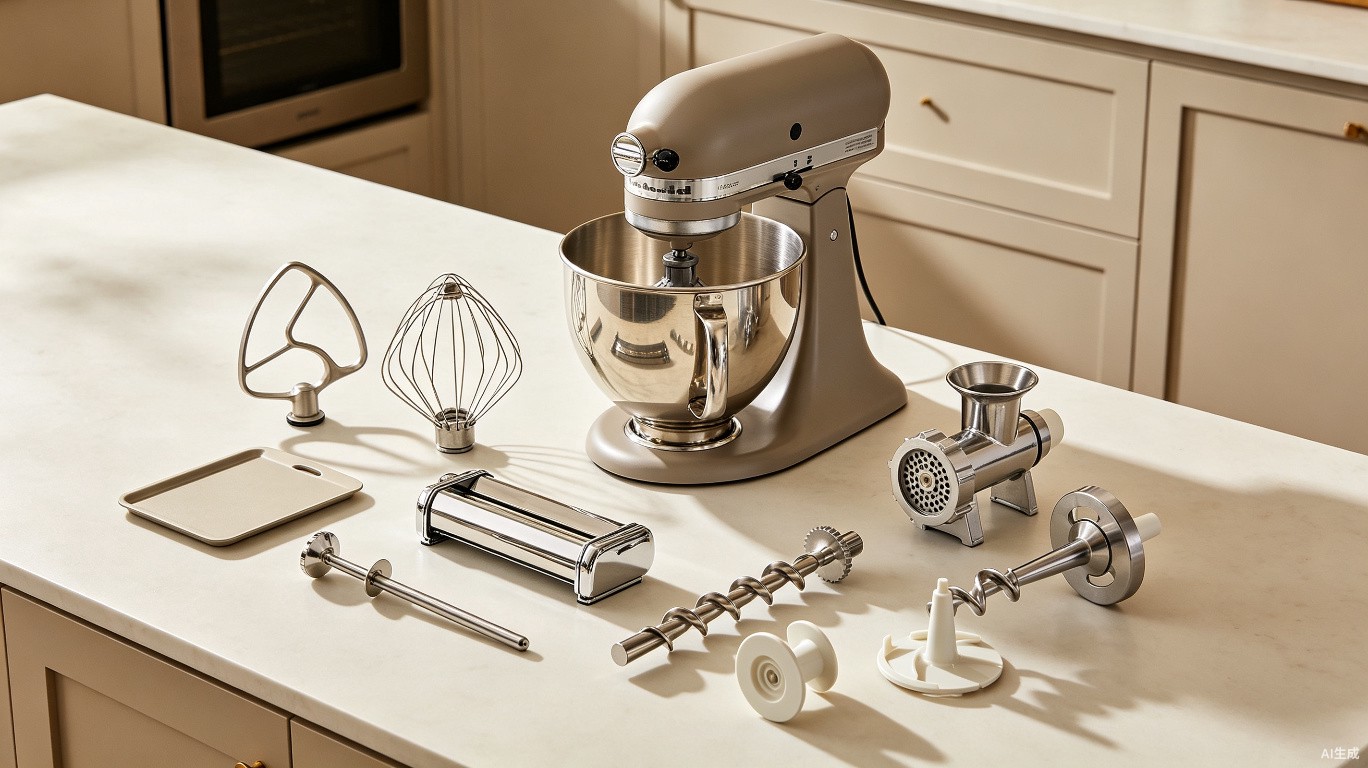
One of the greatest advantages of owning a stand mixer is its ability to transform from a simple mixing machine into a multi-purpose kitchen powerhouse. This versatility comes through attachments — specialized accessories that connect to the mixer's front-mounted power hub and expand its capabilities far beyond mixing, beating, and kneading.
In this comprehensive guide, we explore the most popular and useful stand mixer attachments available in 2026. For each attachment, we explain what it does, how well it performs, who it is best suited for, and whether it is worth the investment. Whether you are a KitchenAid owner looking to expand your machine's capabilities or considering which stand mixer brand offers the best attachment ecosystem, this guide has you covered.
Pasta Roller & Cutter
The pasta roller and cutter attachment is consistently rated as the most popular optional attachment for stand mixers, and for good reason. Fresh homemade pasta is dramatically better than dried pasta — silkier, more tender, and with a flavor that simply cannot be replicated by store-bought alternatives.
How It Works
The pasta roller attachment connects to the stand mixer's front hub and is powered by the mixer's motor. You feed a piece of rested pasta dough through the rollers, which flatten it into a thin sheet. Most roller attachments offer 8-10 thickness settings, allowing you to gradually reduce the dough from thick to paper-thin. A separate cutter attachment (or a combination roller-cutter unit) then cuts the sheet into fettuccine, spaghetti, linguine, or other pasta shapes.
What We Like
- Produces pasta that is far superior to dried alternatives
- The mixer's motor provides consistent, even rolling that is difficult to achieve by hand
- Multiple thickness settings give you control over the final texture
- Can make filled pastas (ravioli, tortellini) with additional accessories
- Fun and rewarding — pasta making becomes an accessible weeknight activity
Considerations
- You still need to make and rest the pasta dough separately
- The initial learning curve can be frustrating — dough may tear or stick if not properly rested
- Quality varies significantly between manufacturer and third-party options
- Price range: $100-$200 for quality models
Meat Grinder
A meat grinder attachment transforms your stand mixer into a capable meat processing station. Freshly ground meat has superior flavor and texture compared to pre-ground supermarket meat, and grinding your own gives you complete control over the fat ratio, cut of meat, and grind size.
How It Works
The meat grinder attachment connects to the front hub and uses a screw-style auger to push meat through a cutting plate. Different plates produce different grind sizes — fine for sausages and burgers, medium for meatloaf and meatballs, and coarse for chili and stew meat. You feed chilled, cubed meat into the hopper and the mixer's motor drives the grinding process.
What We Like
- Freshly ground meat has noticeably better flavor and texture
- Complete control over fat content and meat selection
- Can grind beef, pork, chicken, turkey, venison, and more
- Essential for homemade sausage making (with stuffing tube accessory)
- More cost-effective than a standalone meat grinder
Considerations
- Meat and equipment must be very cold for best results — freeze the grinder parts for 30 minutes before use
- Cleanup requires disassembly and thorough washing of all parts
- Sinew and connective tissue can wrap around the auger, requiring periodic clearing
- Not suitable for grinding large quantities — best for 1-3 pounds at a time
- Price range: $50-$150
Food Grinder
While similar in design to a meat grinder, a food grinder (sometimes called a food strainer or food processing attachment) is designed for grinding and processing vegetables, fruits, and other non-meat foods. It is a versatile attachment for cooks who want to make their own sauces, salsas, baby food, and relishes.
How It Works
The food grinder uses a similar auger mechanism to the meat grinder but is typically designed with different plates and screens optimized for softer foods. It can process tomatoes into sauce, grind vegetables for relish or salsa, mash fruits for baby food, and even create nut butters with repeated processing.
What We Like
- Excellent for making fresh tomato sauce during harvest season
- Perfect for homemade baby food — you control exactly what goes in
- Can process large quantities of vegetables for canning and preserving
- Useful for making nut butters, hummus, and other spreads
- Often comes with multiple screens for different textures
Considerations
- Not as powerful as a dedicated food processor for some tasks
- Can be messy with very juicy fruits — expect some splatter
- Some models are designed to also function as a meat grinder, offering dual use
- Price range: $40-$120
Spiralizer
The spiralizer attachment turns vegetables into long, spiral-cut noodles — a popular alternative to pasta and a creative way to increase vegetable consumption. "Zoodles" (zucchini noodles) have become a staple of low-carb and health-conscious cooking, and a stand mixer spiralizer makes the process quick and effortless.
How It Works
The spiralizer attachment connects to the front hub and features a spinning blade assembly. You press a vegetable (zucchini, sweet potato, cucumber, beet) against the blade using the included pusher, and the mixer's motor rotates the vegetable into uniform spiral noodles. Most spiralizer attachments come with multiple blade inserts for different noodle thicknesses and cuts.
What We Like
- Creates uniform vegetable noodles quickly and consistently
- Multiple blade options for different thicknesses and styles
- The mixer's motor makes spiralizing effortless — no hand cranking required
- Great for meal prep — spiralize a week's worth of vegetables in minutes
- Encourages creative, vegetable-forward cooking
Considerations
- Vegetable size is limited by the feed tube diameter — very large or irregular vegetables may need to be trimmed
- Some vegetables (like very soft tomatoes) do not spiralize well
- Vegetable noodles release water as they sit — best served immediately
- Price range: $60-$150
Ice Cream Maker
The ice cream maker attachment is a favorite among stand mixer owners who enjoy making homemade desserts. It produces rich, creamy ice cream, gelato, and sorbet with a simplicity that makes the process almost addictive. Once you taste fresh homemade ice cream, store-bought versions may never satisfy you again.
How It Works
The ice cream maker attachment consists of a double-walled bowl that must be pre-frozen (typically for 24 hours) before use. The frozen bowl connects to the mixer's base, and the dasher (paddle) is driven by the mixer's motor. You pour your ice cream base into the frozen bowl and the dasher churns it, incorporating air and scraping the frozen sides to create a smooth, creamy texture. Most batches are ready in 20-30 minutes.
What We Like
- Produces ice cream that is fresher and creamier than most store-bought options
- Complete control over ingredients — no artificial preservatives or stabilizers
- Can make ice cream, gelato, sorbet, and frozen yogurt
- Easy to customize with mix-ins, extracts, and swirls
- The mixer's motor provides consistent churning without manual effort
Considerations
- The bowl must be pre-frozen for at least 24 hours — requires advance planning
- Only makes about 2 quarts at a time — not ideal for large batches
- You need a separate ice cream base recipe (the attachment does not cook or prepare the base)
- If you make ice cream frequently, consider a compressor-based model that does not require pre-freezing
- Price range: $50-$100
Pro Tip: For the best ice cream results, chill your ice cream base in the refrigerator for at least 4 hours (or overnight) before churning. A cold base freezes faster in the machine, producing smaller ice crystals and a creamier texture.
Grain Mill
The grain mill attachment is a specialty tool for bakers and health enthusiasts who want to grind whole grains into fresh flour. Freshly milled flour has a noticeably superior flavor and higher nutritional value compared to store-bought flour, because the natural oils in the grain have not oxidized and gone rancid.
How It Works
The grain mill attachment uses a set of grinding stones or metal burrs to crush whole grains into flour. You pour grain kernels into the hopper and the mixer's motor drives the grinding mechanism. Most grain mills offer adjustable coarseness settings, allowing you to produce anything from fine flour for bread baking to coarse meal for polenta and cornbread.
What We Like
- Freshly milled flour has a sweeter, more complex flavor than store-bought
- Higher nutritional value — vitamins and natural oils are preserved
- Can grind wheat, rye, oats, corn, rice, buckwheat, and other grains
- Adjustable coarseness for different applications
- Whole grains store much longer than freshly milled flour — grind only what you need
Considerations
- Grinding is relatively slow — about 1 cup of flour per 5-10 minutes
- Can be loud during operation
- Not suitable for oily seeds, nuts, or spices (these can clog the grinding mechanism)
- Best for bakers who are passionate about whole grains and artisan bread
- Price range: $100-$200
Which Attachments Are Worth It?
With so many attachments available, it can be difficult to decide which ones deserve a spot in your kitchen. Here is our honest assessment based on value, versatility, and how frequently you are likely to use each one.
| Attachment | Value Rating | Best For | Use Frequency |
|---|---|---|---|
| Pasta Roller & Cutter | ⭐⭐⭐⭐⭐ | Pasta lovers, Italian cooking enthusiasts | Weekly |
| Ice Cream Maker | ⭐⭐⭐⭐⭐ | Dessert lovers, families with kids | Weekly (in summer) |
| Meat Grinder | ⭐⭐⭐⭐ | Home butchers, sausage makers, hunters | Monthly |
| Spiralizer | ⭐⭐⭐⭐ | Health-conscious cooks, low-carb dieters | Weekly |
| Food Grinder | ⭐⭐⭐ | Canners, sauce makers, parents making baby food | Seasonal |
| Grain Mill | ⭐⭐⭐ | Artisan bread bakers, whole grain enthusiasts | Weekly (for enthusiasts) |
Our Top 3 Must-Have Attachments
If you could only buy three attachments, we recommend the following based on versatility, quality of results, and frequency of use:
- Pasta Roller & Cutter: The single most transformative attachment. Fresh pasta is so far superior to dried that this attachment pays for itself within a few uses. It opens up an entirely new dimension of home cooking.
- Ice Cream Maker: Homemade ice cream is a revelation, and this attachment makes the process incredibly simple. It is a hit with families and a great way to use seasonal fruits in creative desserts.
- Meat Grinder: If you cook with ground meat regularly, this attachment gives you control over quality, fat content, and freshness that store-bought ground meat simply cannot match. It also opens the door to homemade sausage making.
Compatibility Note
Attachment compatibility varies by brand and model. KitchenAid offers the widest attachment ecosystem with over 15 optional accessories that fit most of their stand mixer models. Kenwood also offers a strong range of attachments for their Chef and Major lines. Before purchasing any attachment, verify that it is compatible with your specific stand mixer model. Third-party attachments are often available at lower prices but may not offer the same quality or fit as manufacturer-approved accessories.
Ready to Expand Your Mixer's Capabilities?
Whether you are looking for the perfect stand mixer to power these attachments or want to upgrade your current machine, our reviews can help you find the best option for your needs and budget.
Find the Best Stand Mixer for Attachments →