📖 Table of Contents
A stand mixer is one of the most versatile appliances in your kitchen, and its true value becomes apparent when you start exploring the full range of recipes it can handle. From silky-smooth bread dough to cloud-light meringue, a stand mixer transforms labor-intensive tasks into effortless, hands-free operations — and delivers more consistent results than you could achieve by hand.
In this collection, we share our favorite stand mixer recipes — the ones we return to again and again in the MixerHub test kitchen. Each recipe has been tested multiple times with different stand mixer models to ensure reliable results regardless of which machine you own. Whether you are a beginner looking for your first stand mixer success or an experienced baker searching for new inspiration, these recipes will help you get the most from your machine.
Perfect Bread Dough
Making bread dough is where a stand mixer truly earns its keep. Kneading bread dough by hand for 10-15 minutes is physically demanding, but a stand mixer handles it effortlessly while you attend to other tasks.
Classic White Bread
- 3 1/2 cups bread flour
- 1 packet (2 1/4 tsp) active dry yeast
- 1 1/2 cups warm water (110°F)
- 2 tbsp olive oil
- 1 tbsp sugar
- 1 1/2 tsp salt
Method: Combine warm water, yeast, and sugar in the mixer bowl. Let stand 5 minutes until foamy. Add olive oil, then gradually add flour and salt. Using the dough hook, mix on Speed 2 for 2 minutes until combined. Increase to Speed 4 and knead for 7-8 minutes until the dough is smooth, elastic, and pulls away from the sides of the bowl. The dough should be slightly tacky but not sticky. Shape, let rise, and bake at 375°F for 30-35 minutes.
Pro Tip: Never knead bread dough above Speed 4 on your stand mixer. Higher speeds can overheat the motor and overwork the gluten, resulting in tough, dense bread.
Chocolate Chip Cookies
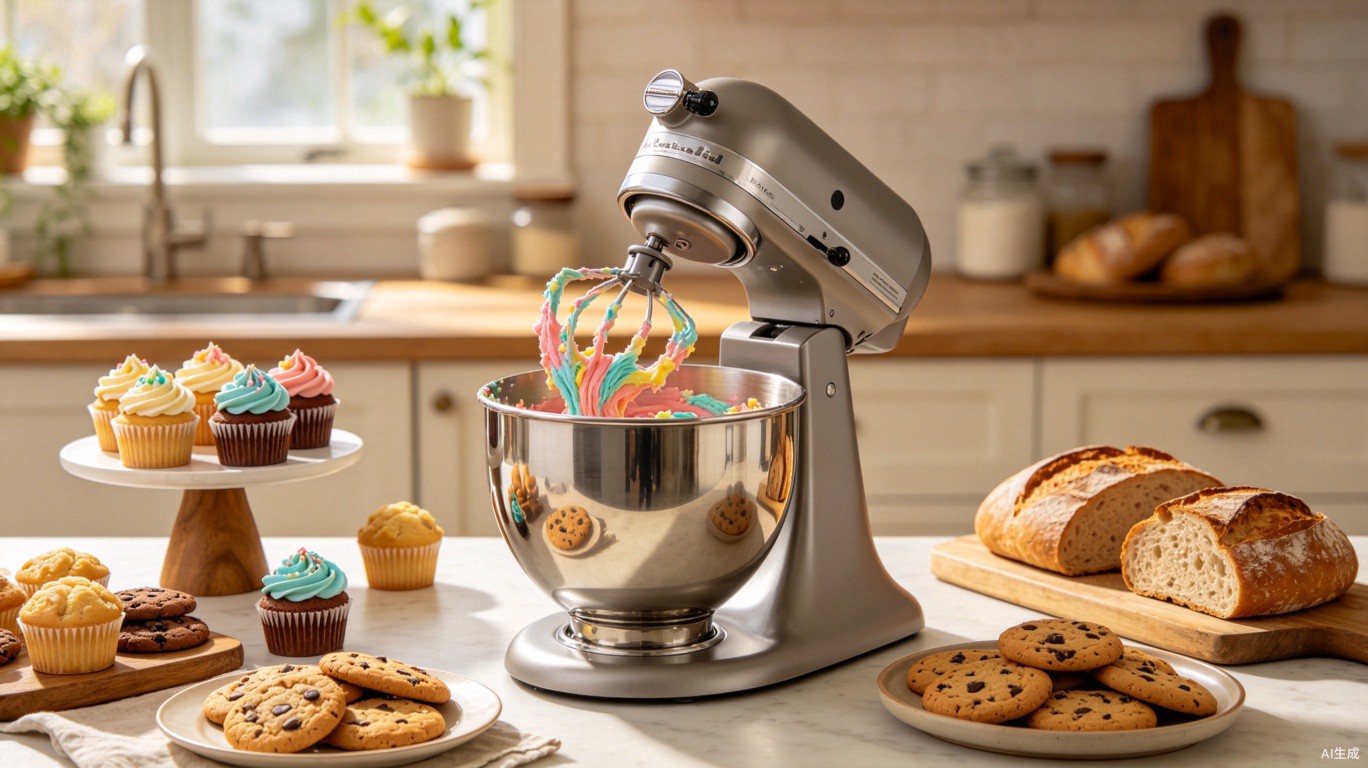
The classic chocolate chip cookie is the recipe that most people make first with their new stand mixer. The flat beater makes creaming butter and sugar effortless, and the large bowl gives you room to fold in chips without spillage.
Stand Mixer Chocolate Chip Cookies (Makes 3 dozen)
- 2 1/4 cups all-purpose flour
- 1 tsp baking soda
- 1 tsp salt
- 1 cup (2 sticks) butter, softened
- 3/4 cup granulated sugar
- 3/4 cup packed brown sugar
- 2 large eggs
- 2 tsp vanilla extract
- 2 cups chocolate chips
Method: Whisk flour, baking soda, and salt in a separate bowl. Using the flat beater, cream butter and both sugars on Speed 4 for 2-3 minutes until light and fluffy. Add eggs one at a time on Speed 2, then add vanilla. Reduce to Speed 1 and gradually add the flour mixture, mixing just until combined. Fold in chocolate chips on Speed 1. Scoop onto baking sheets and bake at 375°F for 9-11 minutes.
Cake Batter
A stand mixer produces cake batter that is smoother, more evenly mixed, and more consistently light than what you can achieve with a hand mixer or by hand. The flat beater incorporates air while evenly distributing ingredients.
Vanilla Layer Cake
- 3 cups cake flour
- 1 tbsp baking powder
- 1/2 tsp salt
- 1 cup (2 sticks) butter, softened
- 1 3/4 cups granulated sugar
- 4 large eggs, room temperature
- 1 cup whole milk
- 2 tsp vanilla extract
Method: Sift flour, baking powder, and salt together. Using the flat beater, cream butter on Speed 4 for 1 minute. Gradually add sugar and cream on Speed 4 for 3-4 minutes until very light and fluffy. Add eggs one at a time on Speed 2, mixing 20 seconds after each addition. Add vanilla. Alternating additions of dry ingredients and milk on Speed 2, beginning and ending with dry ingredients. Mix just until combined — do not overmix. Divide between prepared pans and bake at 350°F for 25-30 minutes.
Whipped Cream
Whipping cream in a stand mixer is one of the simplest and most satisfying uses of the machine. The wire whip incorporates air rapidly, producing perfectly whipped cream in just 2-3 minutes — with no arm fatigue.
Perfect Whipped Cream
- 2 cups heavy whipping cream, cold
- 2-3 tbsp powdered sugar
- 1 tsp vanilla extract
Method: Chill the mixer bowl and wire whip in the freezer for 15 minutes (this helps the cream whip faster and hold its shape longer). Pour cold cream into the chilled bowl. Using the wire whip, start on Speed 2 for 30 seconds to prevent splashing. Gradually increase to Speed 6. When soft peaks begin to form (about 1 1/2 minutes), add powdered sugar and vanilla. Continue on Speed 6 until stiff peaks form, about 1-2 more minutes. Watch carefully — cream can go from perfectly whipped to butter in seconds.
Pro Tip: For the best whipped cream, everything must be cold — the cream, the bowl, and the whip. Warm cream will not whip properly and may turn to butter before reaching stiff peaks.
Pizza Dough
Homemade pizza dough made in a stand mixer is a revelation. The dough hook develops gluten efficiently, producing a chewy, elastic dough that bakes into a crust with superior texture and flavor compared to store-bought alternatives.
New York-Style Pizza Dough (Makes 2 pizzas)
- 4 cups bread flour
- 1 packet (2 1/4 tsp) instant yeast
- 1 1/2 cups warm water (120°F)
- 2 tbsp olive oil
- 1 tsp sugar
- 2 tsp salt
Method: Combine flour and instant yeast in the mixer bowl. Add warm water, olive oil, and sugar. Using the dough hook, mix on Speed 2 for 1 minute. Add salt and continue on Speed 2 for 1 minute. Increase to Speed 4 and knead for 8-10 minutes until the dough is smooth, elastic, and slightly tacky. It should pass the "windowpane test" — stretch a small piece thin enough to see light through it without tearing. Divide, shape into balls, and let rise for 1-2 hours before stretching and baking.
Pasta Dough
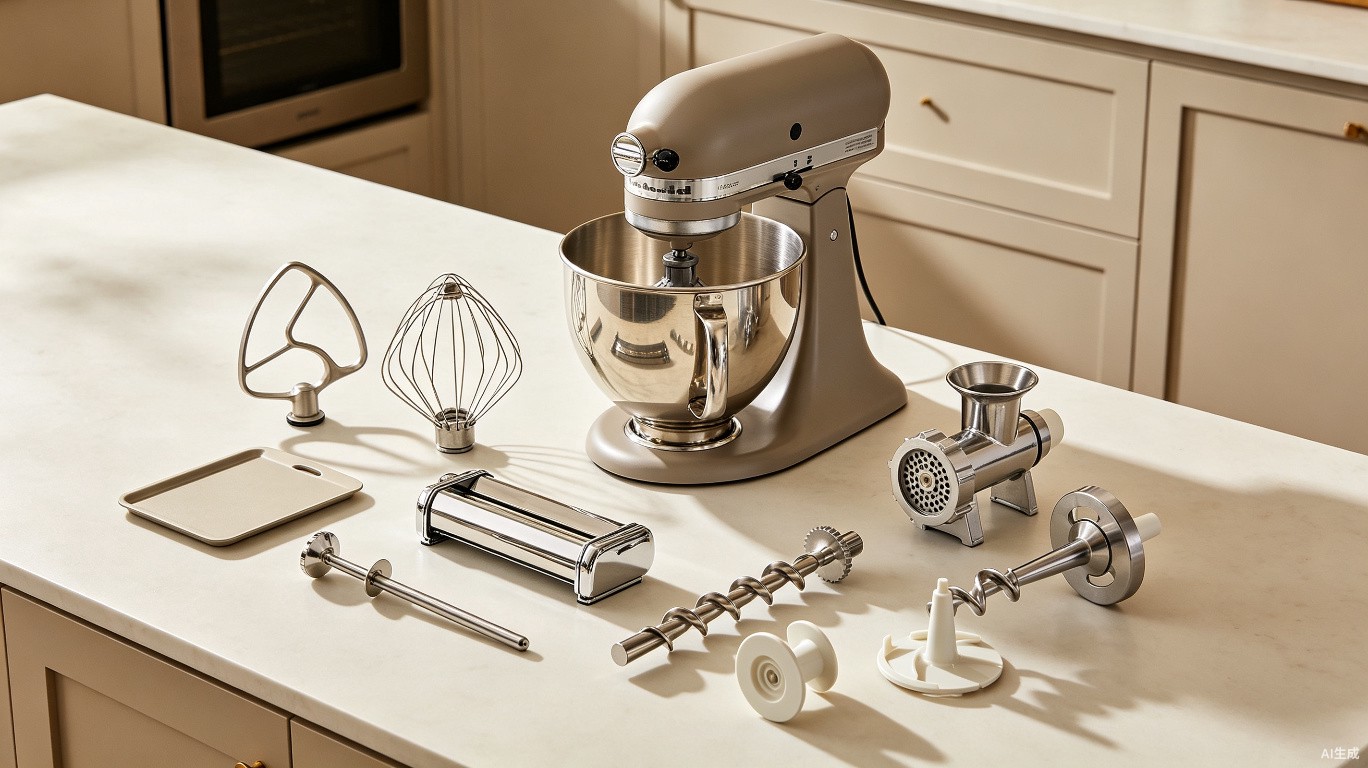
Fresh pasta made with a stand mixer is silky, tender, and far superior to dried pasta. The flat beater brings the dough together, and then you can use a pasta roller attachment to achieve paper-thin sheets.
Basic Egg Pasta Dough
- 2 cups all-purpose flour
- 3 large eggs
- 1/2 tsp salt
- 1 tbsp olive oil
Method: Mound flour on a clean surface and create a well in the center. Add eggs, salt, and olive oil to the well. Using the flat beater on Speed 2, gradually incorporate flour from the walls of the well into the egg mixture. Once a shaggy dough forms, knead on Speed 2 for 2 minutes. Turn the dough out and knead by hand for 2-3 minutes until smooth and elastic. Wrap in plastic and rest for 30 minutes before rolling. For best results, use a pasta roller attachment to roll the dough through progressively thinner settings.
Meringue
Meringue is one of the recipes where a stand mixer's consistent, hands-free whipping truly shines. The wire whip creates stable, glossy meringue that holds its shape beautifully — perfect for pavlovas, pie toppings, and macarons.
Swiss Meringue
- 4 large egg whites, room temperature
- 1 cup granulated sugar
- 1/4 tsp cream of tartar
- 1 tsp vanilla extract
- Pinch of salt
Method: Combine egg whites and sugar in a heatproof bowl set over simmering water. Whisk constantly until the sugar dissolves and the mixture reaches 160°F. Transfer to the mixer bowl. Using the wire whip on Speed 4, whip until soft peaks form (about 3 minutes). Add cream of tartar and increase to Speed 8. Whip until stiff, glossy peaks form and the meringue is cool to the touch (5-7 minutes). Add vanilla and salt in the last minute. The meringue should hold sharp peaks when the whip is lifted.
Pro Tip: For the most stable meringue, ensure your bowl and wire whip are completely clean and free of any grease or fat residue. Even a tiny amount of yolk or oil can prevent egg whites from reaching their full volume.
Recipe Quick Reference
| Recipe | Attachment | Speed | Time | Difficulty |
|---|---|---|---|---|
| Bread Dough | Dough Hook | 2-4 | 9-10 min | Easy |
| Chocolate Chip Cookies | Flat Beater | 1-4 | 5-6 min | Easy |
| Cake Batter | Flat Beater | 2-4 | 6-8 min | Medium |
| Whipped Cream | Wire Whip | 2-6 | 2-3 min | Easy |
| Pizza Dough | Dough Hook | 2-4 | 10-12 min | Easy |
| Pasta Dough | Flat Beater | 2 | 3-4 min | Medium |
| Meringue | Wire Whip | 4-8 | 8-10 min | Medium |
Ready to Start Baking?
These recipes are just the beginning. With the right stand mixer and a few essential attachments, the possibilities are endless. Check out our stand mixer reviews to find the perfect machine for your baking adventures.
Find Your Perfect Stand Mixer →Frequently Asked Questions
What speed should I use for kneading bread dough?
Always use a low speed when kneading bread dough — typically Speed 2 for initial incorporation and Speed 4 for the main kneading. Never exceed Speed 4 when working with heavy doughs. Higher speeds can overheat the motor, damage the gears, and overwork the gluten in the dough, resulting in tough bread. If your mixer feels like it is struggling or the motor sounds strained, reduce the speed or let the mixer rest for a few minutes.
Can I double a cookie recipe in my stand mixer?
In most cases, yes — if you have a 5-quart or larger bowl. A 5-quart stand mixer can typically handle a doubled batch of standard cookie recipes (producing about 4 dozen cookies). The key is to not overfill the bowl. The ingredients should not come above the halfway point of the bowl to allow room for mixing. If you have a 4.5-quart or smaller bowl, it is safer to mix in two separate batches.
Why did my whipped cream turn to butter?
Overwhipping is the most common cause. Once cream reaches stiff peaks, it can transform into butter in as little as 30 seconds of continued mixing. Always watch the cream carefully during the final stages of whipping. Stop the mixer and check the peaks frequently. If you see the cream starting to look grainy or separated, you have gone too far. Using cold cream, a chilled bowl, and a chilled wire whip will give you a wider window between perfectly whipped cream and butter.
How do I know when bread dough is properly kneaded?
Properly kneaded dough should be smooth, elastic, and slightly tacky (but not sticky). The best test is the "windowpane test": tear off a small piece of dough and gently stretch it between your fingers. If you can stretch it thin enough to see light through it without it tearing, the gluten is well-developed and the dough is properly kneaded. If it tears easily, continue kneading for another 1-2 minutes. In a stand mixer, this typically takes 7-10 minutes on Speed 4.
Can I make pasta dough without a pasta roller attachment?
Absolutely. The stand mixer's flat beater is used to bring the pasta dough together, which is the most tedious part. After mixing and resting the dough, you can roll it out by hand using a rolling pin. It requires more effort and the sheets may not be as uniformly thin as with a roller attachment, but the results are still excellent. A pasta roller attachment is a worthwhile investment if you make pasta frequently, but it is not essential for occasional pasta making.
What is the best stand mixer attachment for making meringue?
The wire whip (whisk attachment) is the correct choice for meringue. Its design incorporates maximum air into egg whites, creating the stable foam structure that gives meringue its volume and lightness. Start at a medium speed (4) to build the foam structure, then increase to a higher speed (8) to achieve stiff, glossy peaks. Make sure your bowl and whip are completely clean and grease-free — even a tiny amount of residue can prevent the egg whites from whipping properly.