📖 Table of Contents
Choosing the right stand mixer can feel overwhelming. With dozens of brands, hundreds of models, and price points ranging from under $100 to well over $500, it is easy to get lost in specifications, features, and marketing claims. But here at MixerHub, we have spent hundreds of hours testing stand mixers across every category, and we have distilled everything you need to know into this comprehensive buying guide.
Whether you are a weekend cookie baker looking for your first mixer, a bread enthusiast upgrading to a more powerful machine, or someone buying a gift for the home chef in your life, this guide will walk you through every important factor — bowl capacity, motor power, attachments, build quality, budget, and brand reputation — so you can make a confident, informed decision.
Bowl Capacity & Size
Bowl capacity is one of the first decisions you will need to make, and it has a direct impact on how much you can mix in a single batch. Stand mixer bowls typically range from 3.5 quarts to 7 quarts or more, and the right size depends on your household size, baking frequency, and the types of recipes you make most often.
Small Bowls (3-4.5 Quarts)
Compact mixers with 3 to 4.5-quart bowls are ideal for individuals, couples, or anyone with limited kitchen space. These models can handle single batches of cookies (about 24 cookies), one loaf of bread dough, or up to 4 cups of flour for cake batter. They are lighter and more portable, making them easy to move in and out of cabinets. However, they struggle with large or heavy batches and are not recommended for serious bread bakers.
Medium Bowls (5 Quarts)
The 5-quart bowl is the most popular size and the sweet spot for most home bakers. It handles double batches of cookies (about 4 dozen), up to 4 loaves of bread dough, and 8 cups of flour for large cake recipes. This size offers the best balance of capacity and counter footprint, and it is the size used in most standard recipes you will find online and in cookbooks. If you are unsure which size to get, 5 quarts is the safest choice.
Large Bowls (6-7+ Quarts)
Bowl-lift models and professional-grade mixers typically offer 6 to 7+ quart bowls. These are designed for families who bake in large quantities, avid bread makers, and anyone who regularly prepares big batches for parties, holidays, or meal prep. A 6-quart bowl can handle 13 dozen cookies, 8 loaves of bread, or 14 cups of flour in a single batch. The trade-off is increased weight and counter space — these machines are heavy (25+ pounds) and not easily moved.
Motor Power & Speed Settings
The motor is the heart of your stand mixer. It determines how effectively the machine can handle heavy doughs, how long it can run without overheating, and how consistently it can maintain speed under load. Understanding motor power and speed settings is essential for choosing a mixer that matches your baking needs.
Motor Wattage
Stand mixer motors range from about 250 watts in compact models to over 1,000 watts in professional-grade machines. Here is a general guide to what different power levels can handle:
- 250-300 watts: Suitable for light batters, whipping cream, and small cookie batches. Not recommended for bread dough or heavy mixtures.
- 300-500 watts: The mainstream range. Handles most baking tasks including moderate bread doughs, large cookie batches, and cake batters. This is sufficient for most home bakers.
- 500-750 watts: For serious bakers who regularly make bread, bagels, pizza dough, or other heavy mixtures. These motors can sustain longer mixing times without overheating.
- 750-1000+ watts: Professional and semi-professional territory. These motors handle the stiffest doughs and largest batches with ease, running cool and quiet even under heavy loads.
Speed Settings
Most stand mixers offer between 6 and 12 speed settings. More speeds give you finer control over the mixing process. The key speeds to know:
- Stir / Speed 1: For initial ingredient incorporation and preventing splashes when starting.
- Speeds 2-4: Ideal for mixing heavy doughs, mashing potatoes, and combining dense batters.
- Speeds 4-6: The workhorse range for creaming butter and sugar, mixing cake batter, and general mixing.
- Speeds 6-8: For beating thicker mixtures, making frostings, and whipping cream.
- Speeds 8-10: For whipping egg whites to stiff peaks, making meringue, and achieving maximum aeration.
Pro Tip: When mixing heavy bread dough, always use a low speed (2-4). Running a stand mixer at high speed with dense dough can overheat the motor and damage the gears, even in powerful models.
Attachments & Accessories
One of the biggest advantages of a stand mixer over a hand mixer is the ability to use attachments that expand the machine's capabilities far beyond mixing. When evaluating stand mixers, pay attention to both the standard attachments included and the optional attachments available for purchase.
Standard Attachments
Nearly every stand mixer comes with three core attachments:
- Flat Beater (Paddle): The all-purpose attachment for creaming, mixing, and combining. Used for cookie dough, cake batter, mashed potatoes, meatloaf mix, and countless other tasks.
- Wire Whip (Whisk): Designed for incorporating air into mixtures. Essential for whipped cream, meringue, egg whites, and light, fluffy frostings.
- Dough Hook: A spiral or C-shaped hook for kneading yeast doughs. Used for bread, pizza dough, bagels, and other doughs that require gluten development.
Optional Attachments
Many stand mixers feature a front-mounted attachment hub that accepts additional accessories. Popular optional attachments include:
- Pasta Roller & Cutter: Roll fresh pasta sheets and cut them into fettuccine, spaghetti, or linguine.
- Meat Grinder: Grind fresh meat for burgers, sausages, and more.
- Food Grinder: Grind vegetables, fruits, and other foods for sauces, salsas, and baby food.
- Spiralizer: Create vegetable noodles and spiral cuts for creative presentations.
- Ice Cream Maker: A frozen bowl attachment that churns homemade ice cream, gelato, and sorbet.
- Grain Mill: Grind whole grains into fresh flour for baking.
Not all mixers support the same range of attachments. KitchenAid offers the widest ecosystem with over 15 optional attachments. Other brands may have more limited options. Consider which attachments matter to you when choosing a mixer.
Build Quality & Materials
A stand mixer is a long-term investment, and build quality is what determines whether your machine lasts 5 years or 20. Here are the key factors to evaluate.
Metal vs. Plastic Gears
The internal gears that transfer power from the motor to the mixing attachment are critical. Metal gears (typically steel or zinc alloy) are durable, can handle heavy loads, and are found in premium mixers. Plastic gears are lighter and less expensive but can strip or break under heavy use, especially when kneading dense doughs. Some manufacturers use a sacrificial plastic gear designed to break under extreme stress to protect the motor — this is a deliberate engineering choice, but it means you may need to replace the gear eventually.
Body Construction
Premium mixers feature all-metal bodies (die-cast zinc or aluminum) that provide stability during heavy mixing and resist vibration. Budget models often use plastic housings that are lighter but less stable and less durable. A heavier mixer is generally a better mixer — the weight keeps it anchored to the counter during operation.
Bowl Material
Stainless steel bowls are the standard for good reason: they are durable, lightweight, dishwasher safe, and resist staining and corrosion. Some premium models offer glass or ceramic bowls, which look attractive but are heavier and more fragile. For most users, a polished stainless steel bowl is the best choice.
Warranty
Warranty length is a good indicator of manufacturer confidence. Most budget mixers offer 1-year warranties. Mid-range models typically offer 1-3 years. Premium brands like KitchenAid offer limited lifetime warranties on their professional-grade models. A longer warranty gives you peace of mind and protects your investment.
Budget Considerations
Stand mixers span a wide price range, and it is important to set realistic expectations based on your needs and how much you plan to use the machine.
| Budget Tier | Price Range | What You Get | Best For |
|---|---|---|---|
| Budget | $80-$150 | Basic mixing, lighter construction, fewer speeds, smaller bowl | Occasional bakers, students, gift buyers |
| Mid-Range | $150-$300 | Good power, metal construction, multiple speeds, 5-quart bowl | Regular home bakers, bread makers |
| Premium | $300-$450 | High power, all-metal gears, large bowl, extensive attachment support | Serious bakers, bread enthusiasts |
| Professional | $450-$600+ | Maximum power, commercial-grade build, largest capacity, full warranty | Passionate bakers, small business use |
Our Recommendation: For most home bakers, the $200-$350 range offers the best value. You get a powerful motor, durable metal construction, a versatile 5-quart bowl, and access to optional attachments — all without the premium price tag of professional models.
Top Brands
The stand mixer market is dominated by a handful of well-established brands, each with distinct strengths and reputations.
KitchenAid
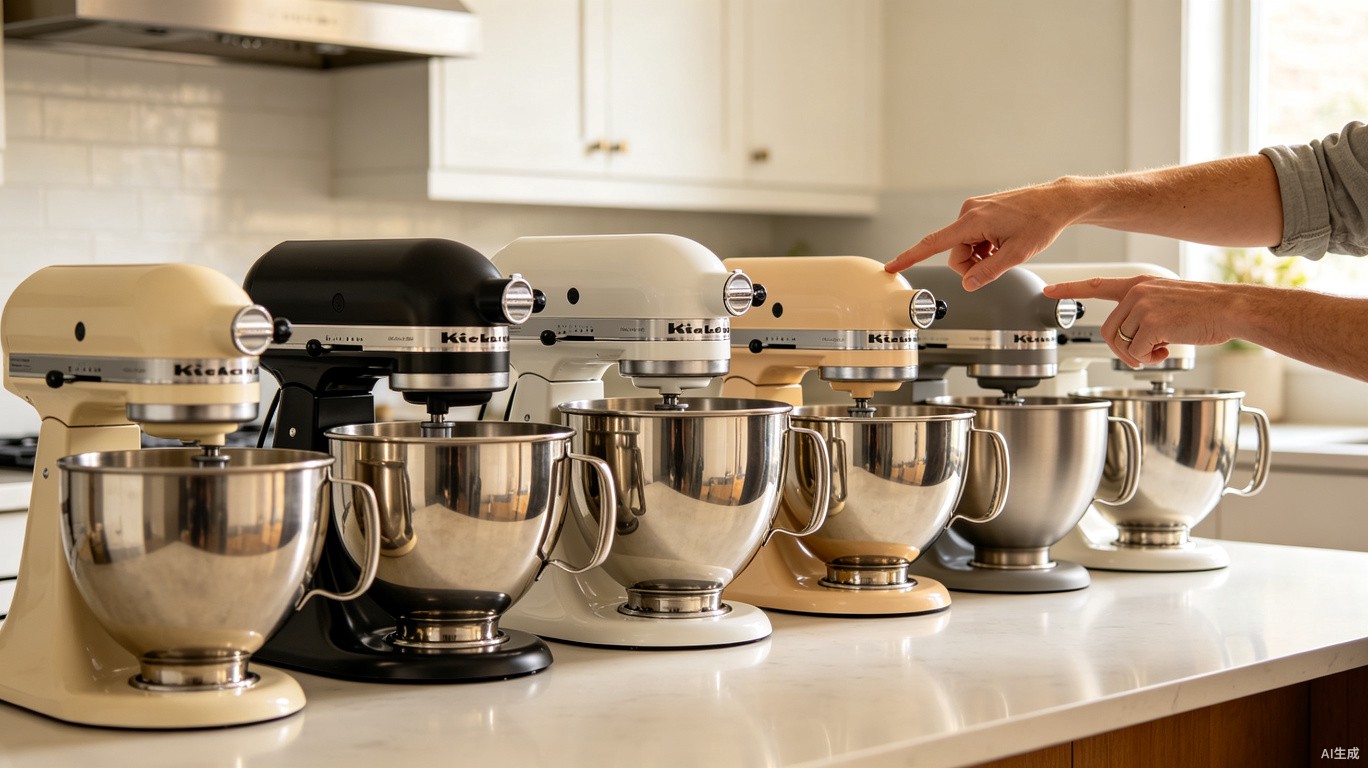
The most iconic stand mixer brand in the United States. KitchenAid has been making stand mixers since 1919 and offers the widest range of models and attachments. Their Artisan series (5-quart, tilt-head) is the best-selling stand mixer in America. The Professional series (bowl-lift) is favored by bread bakers. KitchenAid's attachment ecosystem is unmatched, with over 15 optional accessories. Known for colorful finishes, durable all-metal construction, and strong resale value. Price range: $200-$550.
KitchenAid Pro Line / Commercial
KitchenAid's top-tier offerings feature more powerful motors, larger bowls (6-7 quarts), and commercial-grade components. These are designed for serious bakers who need maximum performance and durability.
Kenwood
A major brand in Europe and increasingly popular worldwide. Kenwood mixers are known for powerful motors, innovative features (built-in scales, temperature probes), and a sleek design aesthetic. The Chef and Major lines are their most popular ranges. Strong attachment ecosystem with many specialized accessories. Price range: $200-$600.
KitchenAid Competitors: Hamilton Beach, Cuisinart, Ankarsrum
Hamilton Beach offers affordable stand mixers ($80-$180) that are great for casual bakers on a budget. Cuisinart provides solid mid-range options ($150-$300) with good build quality. Ankarsrum is a premium Swedish brand ($400-$600) known for its unique roller-and-scraper mixing mechanism that excels at bread dough. Each of these brands serves a specific niche in the market.
Ready to Find Your Perfect Stand Mixer?
Now that you know what to look for in a stand mixer, check out our hands-on reviews of the best models available in 2026. We test every mixer for power, durability, noise, and real-world baking performance.
See Our Top Stand Mixer Picks →Frequently Asked Questions
What is the most important factor when buying a stand mixer?
It depends on your primary use. For bread baking, motor power and dough hook performance are most important. For general baking (cookies, cakes, frostings), bowl capacity and speed control matter most. For versatility, look at the attachment ecosystem. If you had to pick just one factor, we recommend prioritizing motor power — a more powerful mixer will handle a wider range of tasks and last longer because it is not being pushed to its limits.
Is it worth paying more for a stand mixer with all-metal gears?
If you plan to make bread or other heavy doughs regularly, absolutely. Metal gears can withstand the stress of kneading dense doughs far better than plastic gears, and they will not need to be replaced. If you primarily make cookies, cakes, and whipped cream, plastic gears are generally adequate and the savings can be significant. However, all-metal construction generally indicates a higher-quality machine overall, so it is often worth the investment if your budget allows.
Should I get a tilt-head or bowl-lift stand mixer?
Tilt-head models are more compact, lighter, and easier to use — you simply tilt the head back to access the bowl. They are ideal for most home bakers. Bowl-lift models are more stable during heavy mixing, typically offer larger bowls, and are preferred by bread bakers and those who work with large batches. If you have limited counter space or prefer a more ergonomic design, go with tilt-head. If you bake large quantities of bread or need maximum stability, go with bowl-lift.
How much counter space does a stand mixer need?
A typical 5-quart tilt-head stand mixer measures about 14 inches deep, 9 inches wide, and 14 inches tall. You will want at least 2-3 inches of clearance above the mixer for lifting the head and removing the bowl. A bowl-lift model is taller (about 17 inches) and may not fit under standard kitchen cabinets (which are typically 18 inches above the counter). Measure your space before purchasing, especially if you plan to keep the mixer on the counter permanently.
Can I use third-party attachments with my stand mixer?
It depends on the brand. KitchenAid's attachment hub has a standardized design that has remained largely unchanged for decades, so many third-party manufacturers make compatible attachments. However, using third-party attachments may void your warranty, and the quality can vary significantly. We generally recommend using manufacturer-approved attachments for the best fit, performance, and warranty protection. For brands like Kenwood, third-party attachment options are more limited.
What is the best stand mixer for bread making?
For bread making, you need a mixer with a powerful motor (500+ watts), metal gears, and a bowl-lift design for stability. The KitchenAid Professional 600 series, Kenwood Chef XL, and Ankarsrum Assistent are all excellent choices for bread bakers. These machines can handle stiff doughs for extended periods without overheating, and their dough hooks are designed to develop gluten effectively. Look for models with at least a 6-quart bowl if you plan to make multiple loaves at once.