📖 Table of Contents
It is one of the most common dilemmas for home bakers and new kitchen owners alike: should you invest in a stand mixer or a hand mixer? Both tools can mix, beat, and whip your ingredients — but they do so in very different ways, with very different results. The right choice depends on your baking habits, kitchen space, budget, and the types of recipes you make most often.
In this comprehensive comparison, we put stand mixers and hand mixers head to head across every dimension that matters — performance, convenience, storage, cost, and long-term value. By the end of this guide, you will know exactly which type of mixer is right for your kitchen and why.
The Stand Mixer
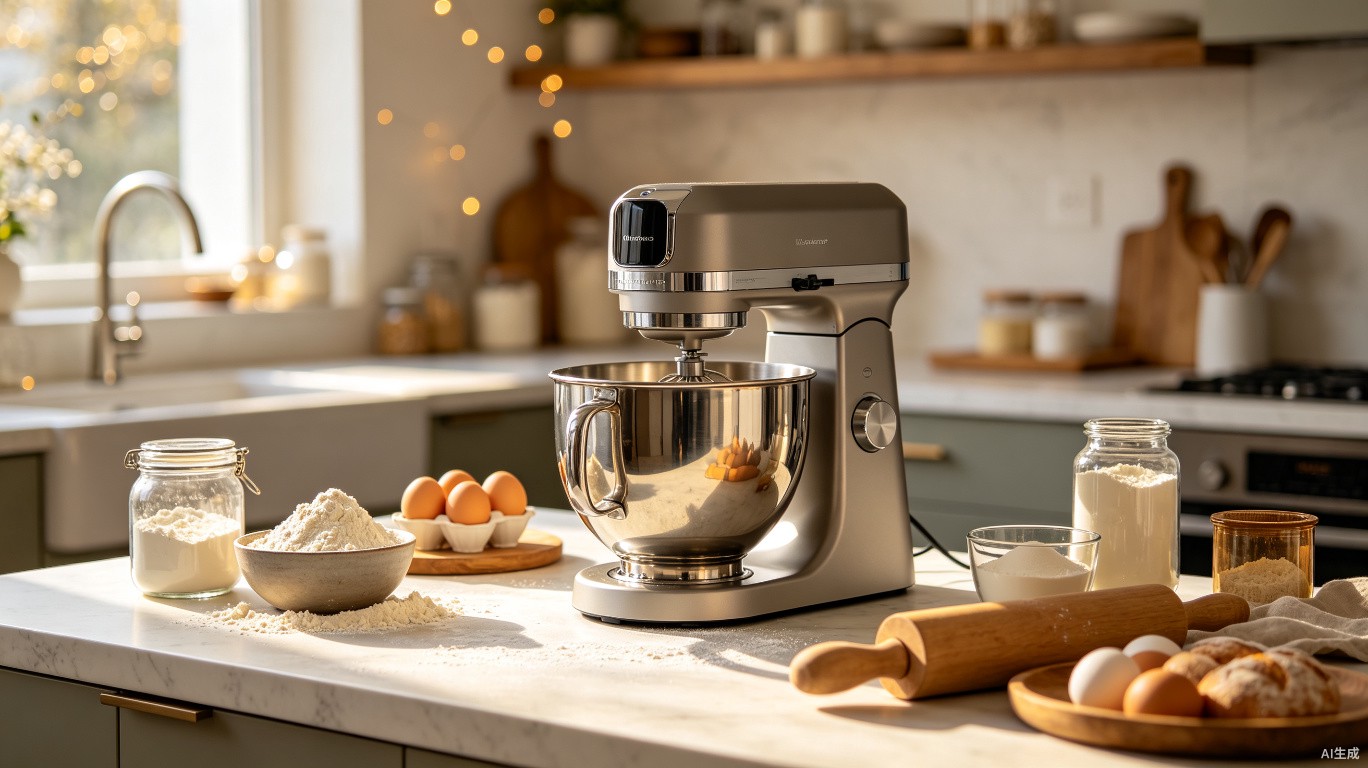
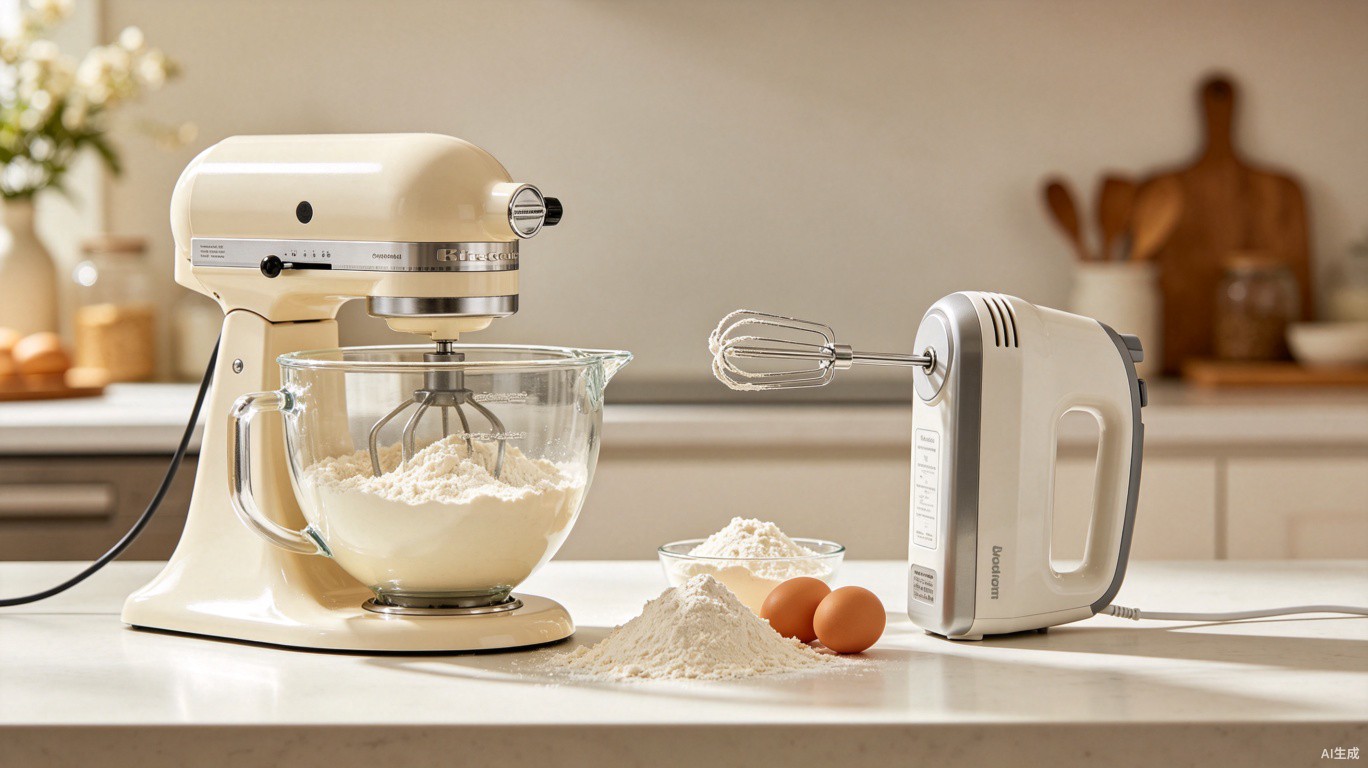
A stand mixer is a countertop appliance with a motor housed in a sturdy base, a fixed or tilting head that drives the mixing attachment, and a bowl that sits beneath the mixing mechanism. You load ingredients into the bowl, select a speed, and the machine does the work while your hands are free for other tasks.
Key Advantages of Stand Mixers
- Hands-free operation: Once you start the mixer, your hands are free to measure ingredients, prep other components, or clean up. This is transformative for complex recipes with multiple steps.
- Superior power: Stand mixers typically have motors ranging from 250 to over 1,000 watts, giving them the torque to handle heavy bread dough, stiff cookie batter, and large batches without strain.
- Planetary mixing action: The attachment rotates on its own axis while orbiting the bowl, ensuring thorough, even mixing that reaches all parts of the bowl.
- Large capacity: Bowls range from 3.5 to 7+ quarts, allowing you to mix large batches of cookies, multiple loaves of bread dough, or big batches of frosting in a single go.
- Attachment versatility: Many stand mixers accept optional attachments for pasta making, meat grinding, spiralizing, ice cream making, and more — turning one machine into a multi-purpose kitchen tool.
- Durability: Built with metal housings and heavy-duty components, quality stand mixers can last 15-20 years or more.
Where Stand Mixers Fall Short
- Counter space: Stand mixers are large and heavy. A typical 5-quart model weighs 20-25 pounds and occupies a significant footprint on your countertop.
- Price: Good stand mixers start around $150 and can exceed $500 for premium models. This is a significant investment compared to a hand mixer.
- Portability: You will not be carrying a stand mixer to a friend's house for a baking session. They are stationary appliances designed to live on your counter.
- Small tasks: For whipping a single egg white or mixing a small amount of frosting, a stand mixer can be overkill — the bowl is large and the attachment may not reach small quantities effectively.
The Hand Mixer
A hand mixer is a handheld appliance with two beaters that protrude from the bottom of a compact motor housing. You hold the mixer and submerge the beaters into a bowl of ingredients. Hand mixers are lightweight, affordable, and easy to store.
Key Advantages of Hand Mixers
- Affordability: Quality hand mixers can be found for $20-$80, making them accessible to every budget.
- Compact storage: Hand mixers are small enough to fit in a kitchen drawer. They take up virtually no counter space.
- Portability: Lightweight and easy to carry, hand mixers are perfect for taking to friends' houses, holiday gatherings, or small kitchens.
- Quick cleanup: Most hand mixer beaters are dishwasher safe, and the compact size of the mixer itself makes it easy to wipe clean.
- Flexibility: You can use a hand mixer in any bowl, pot, or container. There is no fixed bowl size or shape to work around.
Where Hand Mixers Fall Short
- Requires your hand: You must hold and guide the mixer throughout the entire mixing process. This ties up one hand and can cause fatigue during longer mixing sessions.
- Limited power: Hand mixer motors typically range from 100 to 350 watts — significantly less than stand mixers. They can struggle with heavy doughs and may overheat during extended use.
- Less consistent mixing: Without planetary action, you need to manually move the mixer around the bowl to ensure even mixing. Splashing is more common.
- No attachment ecosystem: Hand mixers generally do not accept optional attachments. They are single-purpose tools.
- Not suitable for bread dough: The combination of low power and handheld design makes hand mixers impractical for kneading bread dough or handling stiff mixtures.
Performance Comparison
When it comes to actual mixing performance, stand mixers have a clear advantage in almost every category. Here is a detailed breakdown of how the two types compare across common baking tasks.
| Task | Stand Mixer | Hand Mixer | Winner |
|---|---|---|---|
| Creaming butter & sugar | Excellent — consistent, thorough, hands-free | Good — requires manual movement around bowl | Stand Mixer |
| Whipping cream | Excellent — large capacity, even aeration | Good — works well for small quantities | Stand Mixer |
| Beating egg whites | Excellent — consistent peaks, large volume | Adequate — can work but less consistent | Stand Mixer |
| Cake batter | Excellent — even mixing, no dry spots | Good — may require manual scraping | Stand Mixer |
| Cookie dough | Excellent — handles large batches easily | Fair — struggles with stiff dough | Stand Mixer |
| Bread dough | Excellent — kneads effectively, develops gluten | Not recommended — motor strain, messy | Stand Mixer |
| Small tasks (1 egg, small frosting) | Fair — bowl too large for tiny quantities | Excellent — perfect for small jobs | Hand Mixer |
| Mixing in non-standard containers | Limited to the included bowl | Excellent — works in any bowl or pot | Hand Mixer |
As the table makes clear, the stand mixer wins in the majority of baking tasks, particularly those involving heavy doughs, large batches, or extended mixing times. The hand mixer's performance advantages are limited to small, quick tasks where its portability and flexibility are beneficial.
Convenience & Storage
Convenience is where the hand mixer fights back. While the stand mixer excels at the actual mixing, the hand mixer wins on ease of storage, cleanup, and flexibility.
Storage
A hand mixer can be stored in a kitchen drawer, taking up roughly the same space as a large hair dryer. A stand mixer, on the other hand, is a substantial appliance that needs either dedicated counter space or a cabinet shelf. If you have a small kitchen with limited storage, this is a significant consideration. Many stand mixer owners end up leaving their machine on the counter permanently because moving it in and out of a cabinet is impractical.
Cleanup
Both types of mixers are relatively easy to clean. Hand mixer beaters pop off and go in the dishwasher, and the body wipes clean with a damp cloth. Stand mixer bowls and attachments are also dishwasher safe (for most models), but the machine itself requires careful wiping and cannot be submerged. The stand mixer's larger size means more surface area to clean, but it is not significantly more effort.
Noise
Hand mixers tend to be louder relative to their size because the motor is small and close to your hands. Stand mixers, especially those with gear-driven motors, produce a lower, more muted hum. Premium stand mixers with powerful motors running at low speeds can be surprisingly quiet. If noise is a concern (small apartment, early morning baking), a stand mixer generally has the advantage.
Cost Comparison
Price is often the deciding factor for many buyers. Here is a realistic breakdown of what you can expect at different price points for each type.
| Category | Hand Mixer | Stand Mixer |
|---|---|---|
| Budget | $20-$35 | $100-$180 |
| Mid-Range | $35-$60 | $180-$350 |
| Premium | $60-$100 | $350-$550+ |
| Typical Lifespan | 3-7 years | 10-20+ years |
| Cost Per Year (Mid-Range) | $7-$15/year | $15-$30/year |
| Attachment Costs | None available | $30-$200+ each |
While the upfront cost of a stand mixer is significantly higher, its longer lifespan means the annual cost is not as dramatically different as the purchase price suggests. Additionally, a stand mixer's ability to replace multiple kitchen tools (through attachments) can offset its cost by eliminating the need to buy separate pasta makers, meat grinders, and other specialty appliances.
Which Should You Choose?
The answer depends on your specific situation. Here is our decision framework:
Choose a Stand Mixer If:
- You bake at least twice a month, especially bread, cookies, or cakes
- You regularly make large batches for family gatherings, holidays, or events
- You want to make fresh pasta, grind meat, or explore other attachment-powered tasks
- You have dedicated counter space for a permanent appliance
- You value hands-free operation and consistent, repeatable results
- You are willing to invest $200+ for a machine that will last 15+ years
Choose a Hand Mixer If:
- You bake occasionally — a few times a month or less
- Your recipes are mostly light batters, whipped cream, and simple cookies
- You have limited kitchen space and cannot accommodate a countertop appliance
- You are on a tight budget (under $100)
- You need a portable mixer for small tasks, travel, or shared kitchens
- You rarely make bread dough or other heavy mixtures
The Best of Both Worlds
Many serious home bakers own both. A stand mixer handles the heavy lifting — bread dough, large batches, extended mixing — while a hand mixer is kept for quick, small tasks like whipping a small amount of cream or beating a single egg. If your budget allows, this combination gives you the best tool for every situation.
Our Verdict: If you can only buy one, and you bake with any regularity, choose the stand mixer. Its superior performance, hands-free operation, and long-term durability make it the better investment for anyone who spends meaningful time in the kitchen. The hand mixer is a great secondary tool, but it should not be your only mixer if baking is a regular part of your routine.
Ready to Choose Your Perfect Mixer?
Whether you decide on a stand mixer or want to see our top hand mixer recommendations, we have tested and ranked the best options available in 2026.
See Our Top Mixer Picks →