📖 Table of Contents
Walk into any serious home baker's kitchen and you are almost certain to find one appliance that has earned a permanent spot on the countertop: the stand mixer. From weekend cookie bakers to artisan bread makers, the stand mixer has become the cornerstone of modern home baking. According to market research, the global stand mixer market is projected to exceed $2 billion by 2027, driven by the growing popularity of home baking and cooking shows that inspire home chefs to tackle more ambitious recipes.
But what exactly is a stand mixer? How does it differ from a hand mixer or other kitchen tools? And with so many models, brands, and price points available in 2026, where should a first-time buyer begin? In this comprehensive guide, we answer every question you might have about stand mixers — from the mechanics of how they work to the attachments that transform them into multi-purpose kitchen powerhouses.
What Is a Stand Mixer?
A stand mixer is a countertop kitchen appliance designed to automate the tasks of mixing, beating, whipping, and kneading dough and batter. Unlike a hand mixer that you hold and maneuver, a stand mixer is a stationary machine with a motor housed in a sturdy base, a tilting or fixed head that holds the mixing mechanism, and a bowl that sits on the base beneath the mixing attachment. You add ingredients to the bowl, select your speed, and the mixer does the work — freeing both of your hands for other tasks.
The concept dates back to 1919 when KitchenAid introduced the H-5 stand mixer, revolutionizing home baking. Over a century later, the fundamental design principle remains the same: a powerful motor drives a planetary mixing action that ensures thorough, even incorporation of ingredients. Today's stand mixers are available in a wide range of sizes, power levels, and price points — from compact models perfect for small apartments to professional-grade machines capable of handling heavy bread dough and large batches.
The core components of a stand mixer include a motor housing (the body that contains the motor and gears), a mixing head (either tilting or bowl-lift design), a mixing bowl (typically stainless steel, available in various sizes), and mixing attachments (the flat beater, wire whip, and dough hook that come standard with most models). The mixing attachments are driven by a planetary action — they rotate on their own axis while simultaneously revolving around the bowl — ensuring that every part of the mixture is reached.
How Does a Stand Mixer Work?
The science behind a stand mixer centers on planetary mixing action. Unlike a simple rotating beater that spins in one spot, the stand mixer's attachment rotates on its own axis while simultaneously orbiting around the inside of the bowl. This dual motion ensures that ingredients are thoroughly combined from all angles, eliminating the need to manually scrape the sides of the bowl as frequently as you would with a hand mixer.
The Mixing Process Step by Step
Here is a detailed breakdown of what happens during a typical stand mixer operation:
- Power delivery: The electric motor converts electrical energy into rotational force (torque). In gear-driven models, a series of internal gears transfer and regulate this power to the attachment hub. In belt-driven models, a belt system performs the same function with less noise.
- Planetary action: The mixing attachment (flat beater, whisk, or dough hook) is mounted on a shaft that both spins the attachment and revolves it around the bowl. This orbital motion ensures comprehensive coverage of the entire bowl.
- Ingredient incorporation: As the attachment moves through the mixture, it folds, stretches, and compresses the ingredients. For batters, this means even distribution of wet and dry components. For dough, this means developing the gluten network that gives bread its structure and chew.
- Speed control: Most stand mixers offer multiple speed settings (typically 6-12 speeds). Lower speeds are used for heavy doughs and initial ingredient incorporation, while higher speeds are used for whipping cream, beating egg whites, and creaming butter and sugar.
- Stability: The weighted base and sturdy construction of a stand mixer keep it firmly planted on the countertop, even when processing heavy doughs at low speeds. This stability is a key advantage over hand mixers.
Stand Mixer vs Hand Mixer
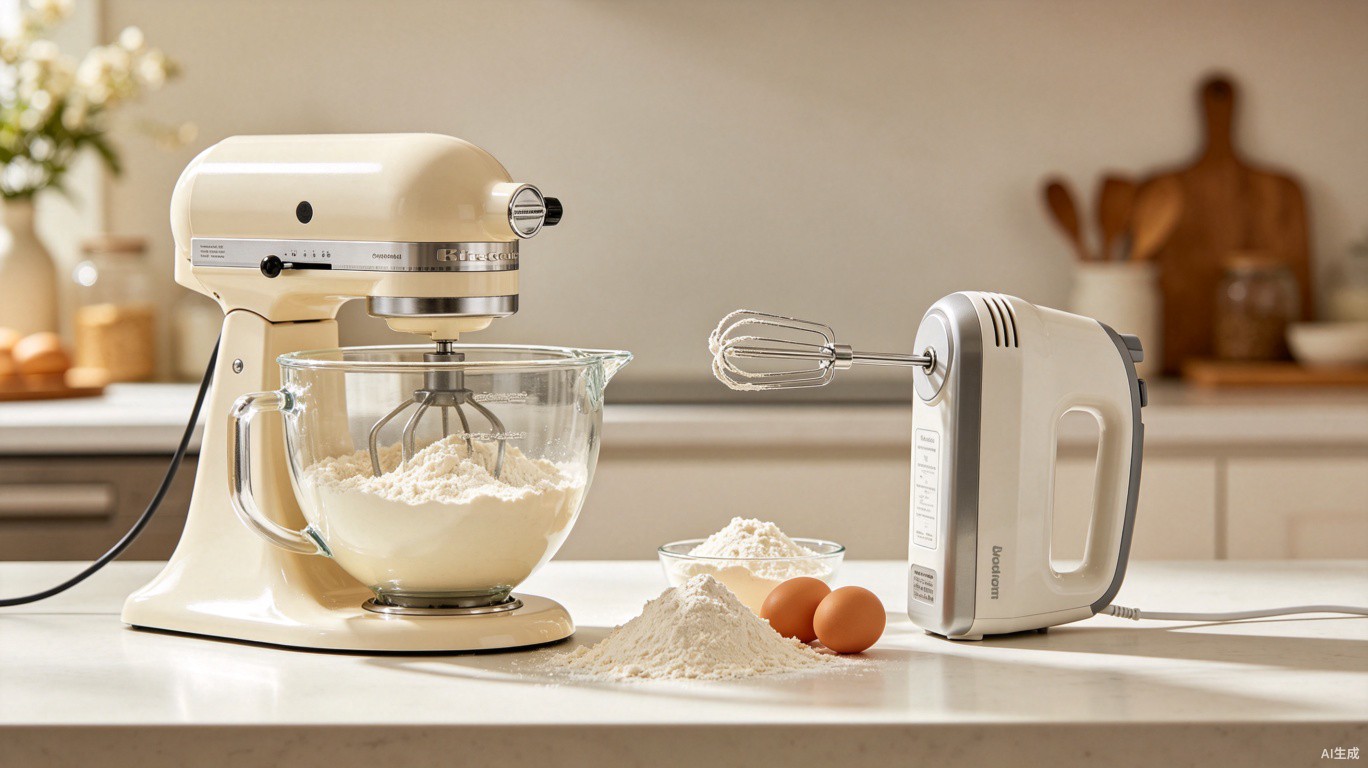
One of the most common questions from first-time buyers is whether to invest in a stand mixer or stick with a hand mixer. Both tools have their place in the kitchen, but they serve different needs and budgets.
| Feature | Stand Mixer | Hand Mixer |
|---|---|---|
| Price Range | $100-$500+ | $20-$80 |
| Motor Power | 250-1000+ watts | 100-350 watts |
| Bowl Capacity | 3.5-7+ quarts | Use your own bowls |
| Hands-Free Operation | Yes | No |
| Heavy Dough Capability | Excellent | Limited |
| Attachment Options | 10+ optional attachments | Limited or none |
| Counter Space | Requires dedicated space | Easy to store in a drawer |
| Portability | Heavy and stationary | Lightweight and portable |
| Best For | Serious bakers, large batches | Casual baking, small tasks |
The stand mixer excels when you need to handle heavy doughs, large batches, or extended mixing times. It is hands-free, meaning you can add ingredients or perform other tasks while it runs. The hand mixer, on the other hand, is more affordable, easier to store, and perfectly adequate for light batters, whipping cream, and occasional baking. If you bake frequently or plan to make bread regularly, a stand mixer is a worthwhile investment.
Key Components & Attachments
Understanding the main components of a stand mixer will help you make a more informed purchasing decision and appreciate the engineering that goes into these machines.
- Motor Housing: The body of the mixer contains the electric motor and the gear mechanism that transfers power to the mixing attachment. Higher-end models feature all-metal gears for durability, while budget models may use plastic gears that can wear out under heavy use.
- Mixing Head: There are two main designs: tilt-head, where the entire head tilts back to allow bowl access, and bowl-lift, where the bowl is raised into position using a lever. Tilt-head models are more compact and easier to use; bowl-lift models offer greater stability for heavy mixing.
- Mixing Bowl: Typically made of stainless steel, bowls range from 3.5 quarts (compact models) to 7+ quarts (professional models). Some bowls feature handles, pour spouts, or measurement markings. Glass and ceramic bowls are also available for certain models.
- Flat Beater: The workhorse attachment for general mixing tasks — creaming butter and sugar, mixing cake batter, combining meatloaf ingredients, and more. Its flat, wide design efficiently folds and blends ingredients.
- Wire Whip (Whisk): Designed for incorporating air into mixtures. Use it for whipping cream, beating egg whites to stiff peaks, making meringue, and creating light, fluffy frostings.
- Dough Hook: A spiral or C-shaped hook designed specifically for kneading bread dough, pizza dough, and other yeast doughs. It mimics the action of hand kneading, developing gluten structure without overworking the dough.
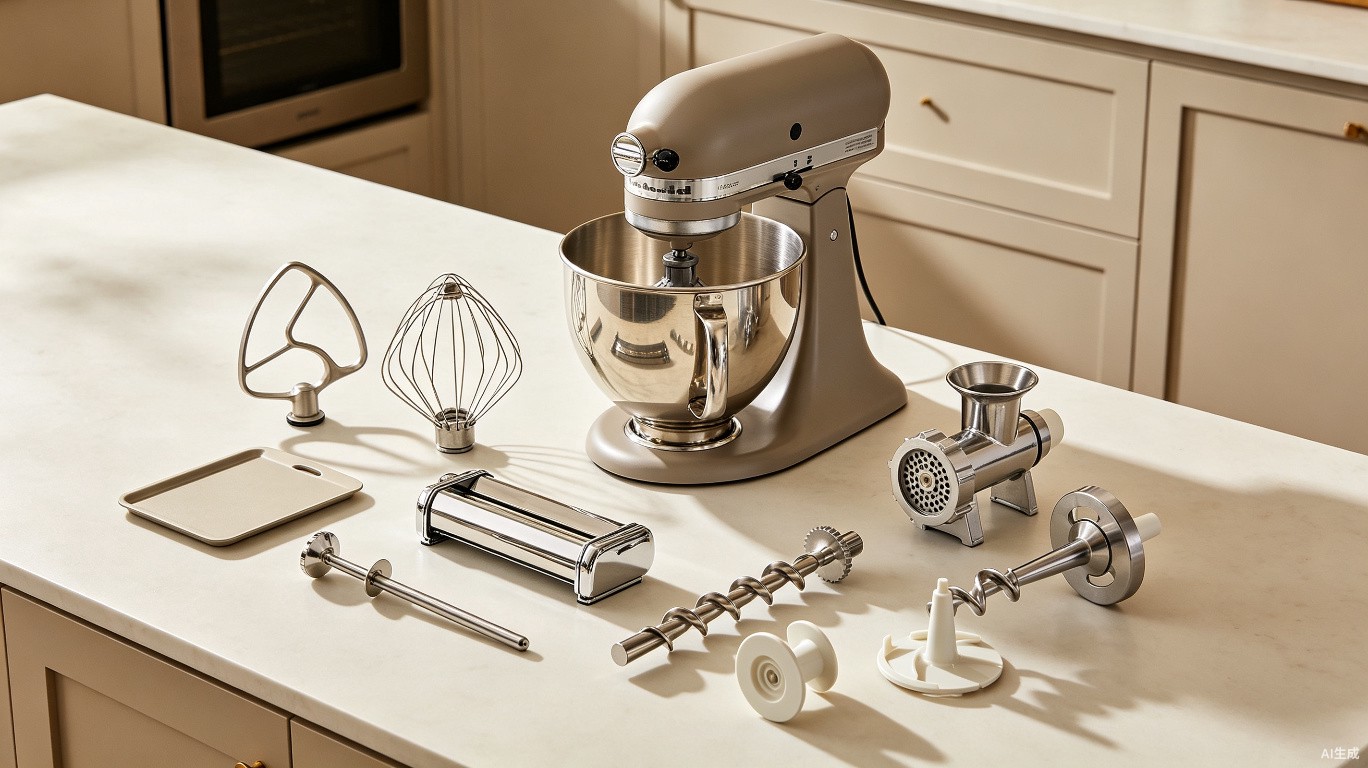
- Attachment Hub: Most stand mixers feature a front-mounted hub where optional attachments can be connected. This is what transforms a stand mixer from a single-purpose mixing machine into a multi-purpose kitchen tool capable of grinding meat, rolling pasta, spiralizing vegetables, and more.
Benefits of Using a Stand Mixer
If you bake regularly — even just a few times a month — a stand mixer offers compelling advantages that make it one of the most valuable appliances in your kitchen.
Hands-Free Operation
Perhaps the most transformative benefit of a stand mixer is that it frees both of your hands. While the mixer runs, you can measure and add ingredients, prepare other components of your recipe, wash prep bowls, or simply take a break. This is especially valuable when making recipes with multiple steps or when preparing large holiday baking sessions.
Consistent Results
The planetary mixing action of a stand mixer ensures that ingredients are incorporated evenly and consistently every time. No more pockets of dry flour in your cake batter or unevenly distributed mix-ins in your cookie dough. The mixer's steady, mechanical action produces repeatable results that are difficult to achieve by hand.
Power for Heavy Tasks
Kneading bread dough by hand is labor-intensive and time-consuming. A stand mixer with a powerful motor can handle stiff bread dough, bagel dough, and other heavy mixtures with ease. This opens up a world of baking possibilities that would be physically demanding or impossible with a hand mixer or manual mixing.
Versatility Through Attachments
Modern stand mixers are far more than just mixing machines. With optional attachments, a single stand mixer can grind meat, roll pasta, spiralize vegetables, make ice cream, juice fruits and vegetables, and even extrude pasta shapes. This versatility makes the stand mixer one of the most multi-functional appliances in your kitchen, potentially replacing several single-purpose tools.
Durability and Longevity
A quality stand mixer is built to last. Many premium models come with warranties of one year or more, and it is not uncommon for well-maintained stand mixers to last 15-20 years or more. Brands like KitchenAid and Kenwood have built reputations for producing machines that endure decades of regular use. When you consider the cost per year of use, a stand mixer is an excellent investment.
Ready to Find Your Perfect Stand Mixer?
Now that you understand what a stand mixer is, how it works, and what features matter most, it is time to find the right appliance for your kitchen. We have tested dozens of top models to help you choose with confidence.
See Our Best Stand Mixer Reviews →Frequently Asked Questions
Is a stand mixer worth the investment for a home baker?
Absolutely. If you bake more than a few times a month, a stand mixer is one of the best investments you can make for your kitchen. It saves time and physical effort, produces more consistent results, and opens up new baking possibilities like bread making. Entry-level models start around $100-$150, and premium models can last 15-20 years or more. When you calculate the cost per use, a stand mixer is remarkably affordable compared to the value it provides.
Can a stand mixer replace a hand mixer entirely?
In most cases, yes. A stand mixer can perform virtually every task that a hand mixer can — whipping cream, beating eggs, mixing batters — and it does so more effectively thanks to its superior power and planetary mixing action. The one scenario where a hand mixer might still be useful is for very small tasks (whipping a single egg white) or when you need to mix directly in a serving dish. For most home bakers, a stand mixer makes a hand mixer redundant.
What size stand mixer should I get?
Bowl capacity depends on your typical baking needs. A 4.5-quart mixer is suitable for individuals or couples who bake small batches. A 5-quart mixer is the most popular size and handles most recipes well, including double batches of cookies. A 6-quart or larger mixer is ideal for families who bake frequently, those who make bread regularly, or anyone who likes to prepare large batches for holidays and events. Keep in mind that larger mixers are heavier and take up more counter space.
How much should I spend on a stand mixer?
Stand mixers range from under $100 to over $500. For casual bakers who make cookies and cakes occasionally, a $100-$200 model will serve you well. For regular bakers who make bread and larger batches, expect to invest $200-$400 for a machine with the power and durability to handle heavy doughs. Premium models in the $400-$600 range offer the best performance, largest capacity, and longest warranties. Consider how often you will use the mixer and what tasks you need it to perform when setting your budget.
What is the difference between tilt-head and bowl-lift stand mixers?
Tilt-head mixers have a head that tilts back on a hinge, giving you access to the bowl and attachment. They are generally more compact, lighter, and easier to use for adding ingredients during mixing. Bowl-lift mixers have a fixed head and a bowl that raises into position using a lever on the side. They are typically more stable during heavy mixing, offer larger bowl capacities, and are preferred by serious bread bakers. Both designs are effective — the choice comes down to your preferences for ergonomics, counter space, and the types of mixing you do most.
How do I clean and maintain a stand mixer?
Cleaning a stand mixer is straightforward. The mixing bowl and attachments (flat beater, wire whip, dough hook) are typically dishwasher safe, though hand washing is recommended to preserve their finish. Wipe the exterior of the mixer with a damp cloth after use. Avoid submerging the motor housing in water. Periodically check the attachment hub for debris. If your mixer has a brushed metal finish, use a specialized cleaner to maintain its appearance. Never use abrasive cleaners or scouring pads on any part of the mixer.