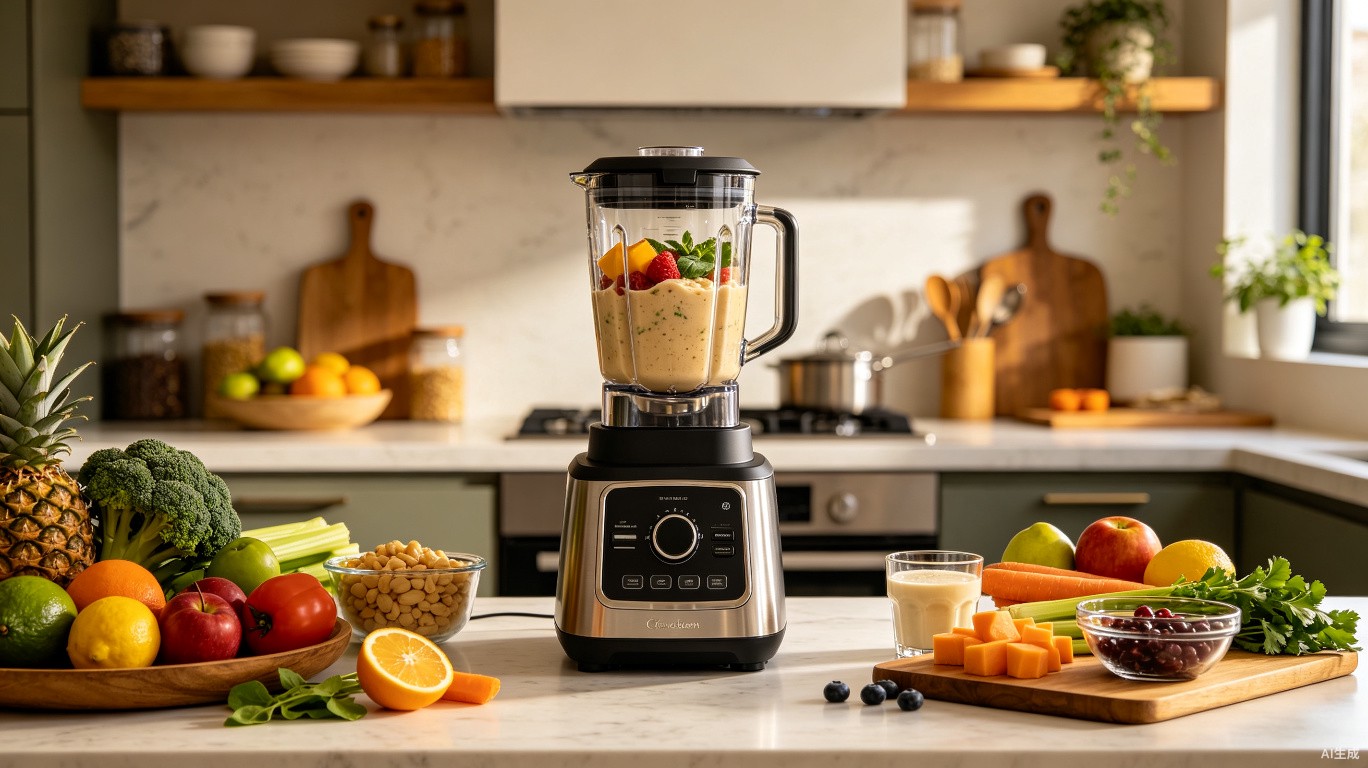
When most people shop for a blender, they focus on wattage, brand, and price — but the size of the pitcher or cup is just as important. Buy one that's too small and you'll be blending in batches every morning. Buy one that's too large and you'll waste counter space, struggle to clean it, and end up with smoothies that don't blend properly because the jar is barely a quarter full.
Blender capacity — measured in ounces (oz) or liters (L) — determines how much you can make in a single cycle. The right size depends on how many people you're blending for, how often you use it, and what you make. In this guide, we'll walk through every common blender size, explain how to calculate what you need, and cover the materials and motor power that go hand in hand with capacity.
By the end, you'll know exactly which capacity is right for your kitchen — no guessing required.
Why Blender Size Matters
Blender size affects more than just how much smoothie you can pour. It influences blending performance, cleanup, storage, and even the texture of your results. Here's why getting the size right matters more than you might think.
First, blenders are designed to work with a specific volume of ingredients. Every jar has a "minimum fill line" — usually about a quarter of its total capacity — below which the blades can't create a proper vortex. If you blend a single 8-ounce smoothie in a 72-ounce pitcher, the ingredients will barely reach the blades, and you'll end up with a chunky, uneven mess. Conversely, if you overfill a small personal blender, it will leak, strain the motor, and produce a thin, watery drink because the contents can't circulate.
Second, size directly affects convenience. A personal blender with a 24-ounce cup lets you blend and drink from the same container — minimal cleanup, perfect for busy mornings. A 72-ounce countertop model is ideal for families but means washing a large pitcher every time. And if your kitchen has limited counter space, a hulking 64-ounce blender might not fit under your cabinets when stored.
Personal Blender Sizes (16–32 oz)
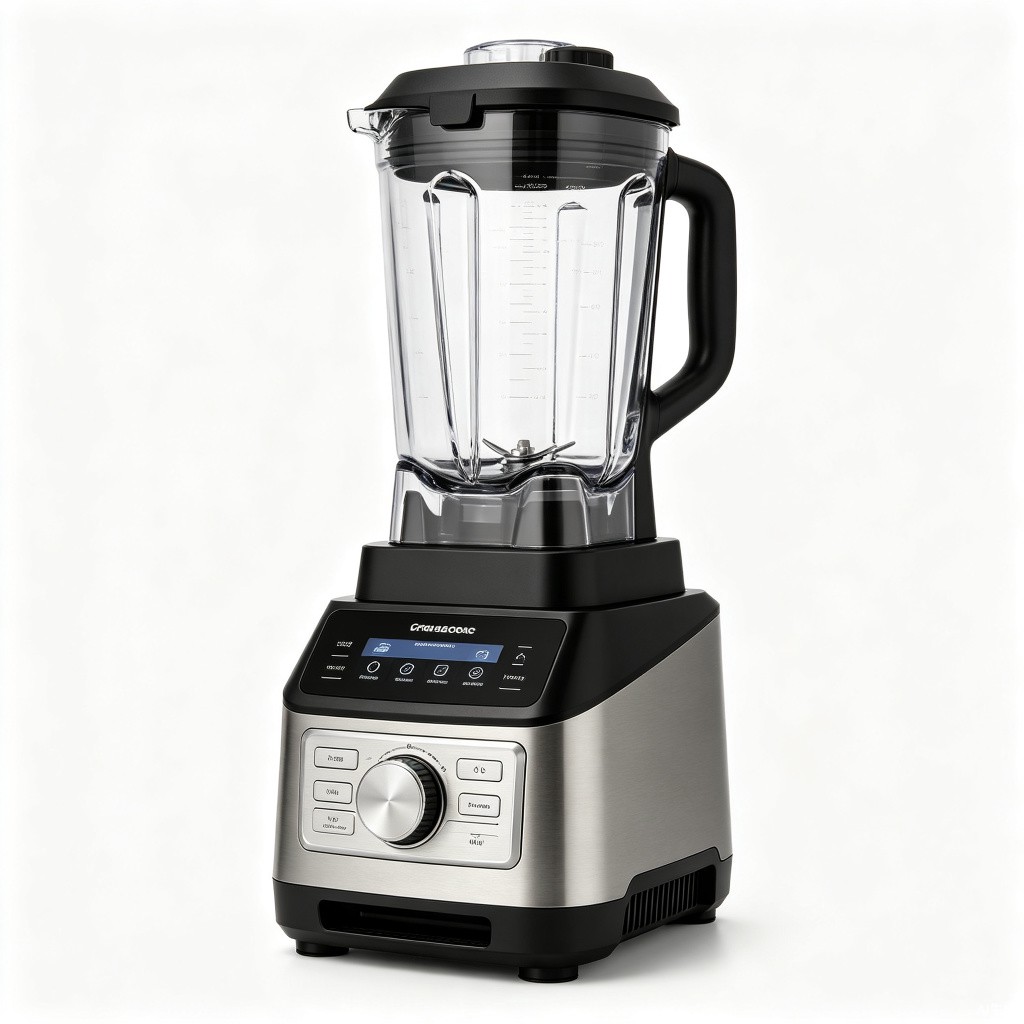
Personal blenders are the smallest category, typically ranging from 16 to 32 ounces. These compact machines are designed for single servings — you blend directly in a travel cup, snap on a lid, and take it with you. They're the go-to choice for people who make one smoothie a day and value speed and easy cleanup above all else.
The most common personal blender capacities are:
- 16–18 oz: The smallest cups, ideal for a quick single smoothie. Found on entry-level models like the original NutriBullet.
- 24 oz: The sweet spot for personal blenders — enough for a generous smoothie or a small protein shake. Most NutriBullet Pro and Ninja Fit cups fall here.
- 28–32 oz: Larger personal cups that can handle a meal-replacement smoothie or two small servings. Some models, like the Ninja Blender with Auto-iQ, come with multiple cup sizes in this range.
Personal blenders shine for their convenience, but they have limitations. Their smaller motors (typically 600–1200 watts) and narrow cups make them less effective at crushing large amounts of ice or blending thick, frozen mixtures. They're also not suitable for hot soups or large batches. If you live alone, drink one smoothie a day, and rarely cook for others, a personal blender is likely all you need.
Standard Countertop Blenders (48–64 oz)
Standard countertop blenders are the most popular category for home kitchens, with pitchers ranging from 48 to 64 ounces. These versatile machines can handle everything from single smoothies to family-sized batches, and they typically pair a mid-to-large pitcher with a powerful motor (1000–1500 watts).
The two most common sizes in this range are:
- 48 oz: A versatile mid-size that works well for 2–3 people. Many Vitamix and Ninja models use this capacity. It's large enough for family smoothies but not so large that single servings get lost.
- 64 oz: The most popular full-size capacity. A 64-ounce pitcher can make 4–6 servings of smoothie, a full pot of soup, or a large batch of sauce. This is the standard size for high-performance blenders like the Vitamix 5200 and Blendtec Classic.
The advantage of a 48–64 ounce blender is flexibility. You can make a single smoothie (as long as you respect the minimum fill line) or a large batch for a crowd. These blenders also tend to have stronger motors and better blade designs, meaning smoother results on tough ingredients like frozen fruit, nuts, and ice. The trade-off is that they take up more counter space and require more effort to clean than a personal blender.
Large Capacity Blenders (72+ oz)
Large-capacity blenders feature pitchers of 72 ounces or more, with some commercial-style home models reaching 90 or even 120 ounces. These are designed for big families, meal prep enthusiasts, and anyone who regularly cooks for groups.
The Ninja Professional BL610, with its 72-ounce pitcher, is one of the most popular large-capacity blenders for home use. At this size, you can blend a full pitcher of margaritas for a party, puree a large batch of soup, or make enough smoothie for the whole family in one go. The trade-off is weight and storage — a full 72-ounce glass pitcher can be heavy to pour, and the base unit is significantly larger than standard models.
Before buying a 72+ ounce blender, measure your counter space and the height of your cabinets. Many large-capacity models are too tall to store upright under standard 18-inch upper cabinets. Also consider that a nearly empty large pitcher won't blend well — if you usually make single servings, a large blender will underperform compared to a personal one.
Commercial Blender Sizes
Commercial blenders, used in smoothie shops, restaurants, and bars, are built for volume and durability. Their pitchers typically range from 32 to 48 ounces for bar-style models (optimized for single drinks) up to 64–96 ounces for high-volume kitchen models. Brands like Vitamix (The Quiet One, Vita-Prep) and Blendtec (Stealth, Connoisseur) dominate this space.
What sets commercial blenders apart isn't just size — it's the combination of high-capacity jars with industrial-strength motors (1500–2400 watts), sound enclosures, and reinforced blades designed for thousands of cycles per week. Unless you run a business or host large gatherings regularly, a commercial blender is overkill for home use — both in size and price. That said, some home cooks who make nut butters, flours, or large batches of hot soup gravitate toward commercial-grade models for their power and longevity.
How to Calculate the Size You Need
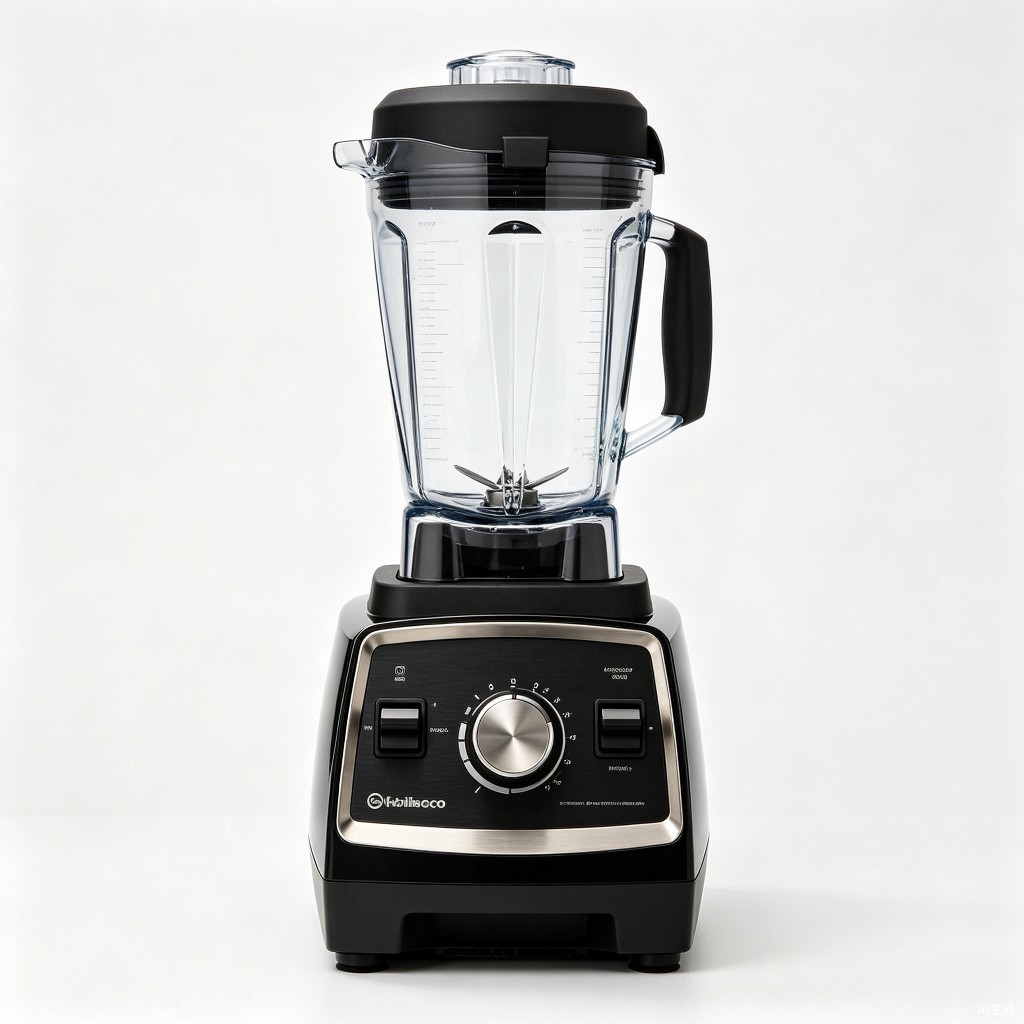
Choosing the right blender size comes down to three factors: your household size, how often you blend, and what you make. Here's how to think through each one.
1. Household Size
The simplest way to estimate capacity is to assume 12–16 ounces per person per serving. A single serving for one person needs about 16 ounces of capacity, while a family of four needs at least 48–64 ounces for a single round of smoothies. Use this as your starting point, then adjust based on the other factors below.
2. Frequency of Use
If you blend daily, convenience matters as much as raw capacity. A daily single-serve smoothie drinker is often better off with a personal blender, even if they occasionally make a larger batch — the time saved on cleanup adds up fast. If you blend once a week for meal prep, a large-capacity countertop model makes more sense because you can make multiple servings at once and store them.
3. Types of Recipes
What you blend also dictates size. Smoothies and shakes work in any size. Hot soups require at least a 48-ounce pitcher with a vented lid to allow steam to escape. Nut butters and doughs need a wide, mid-to-large jar with enough room for thick mixtures to move. Frozen drinks and margaritas for a crowd demand 64 ounces or more. If you only make smoothies, a smaller blender is fine; if you cook a variety of recipes, opt for a larger, more versatile model.
Sizing Guide: Recommendations by Household
Here's a quick-reference table to help you match blender capacity to your situation. These are general guidelines — adjust based on your specific habits and recipes.
- Solo smoothie drinker (1 person, daily): 16–24 oz personal blender. Best for speed and easy cleanup.
- Couple (2 people, several times a week): 32–48 oz personal or small countertop blender. Enough for two servings at once.
- Small family (3–4 people): 48–64 oz standard countertop blender. Handles family smoothies and general cooking.
- Large family (5+ people): 64–72 oz large-capacity blender. One batch serves everyone.
- Meal prepper or entertainer: 72+ oz large-capacity or commercial-style blender. Batch cooking and party drinks without multiple cycles.
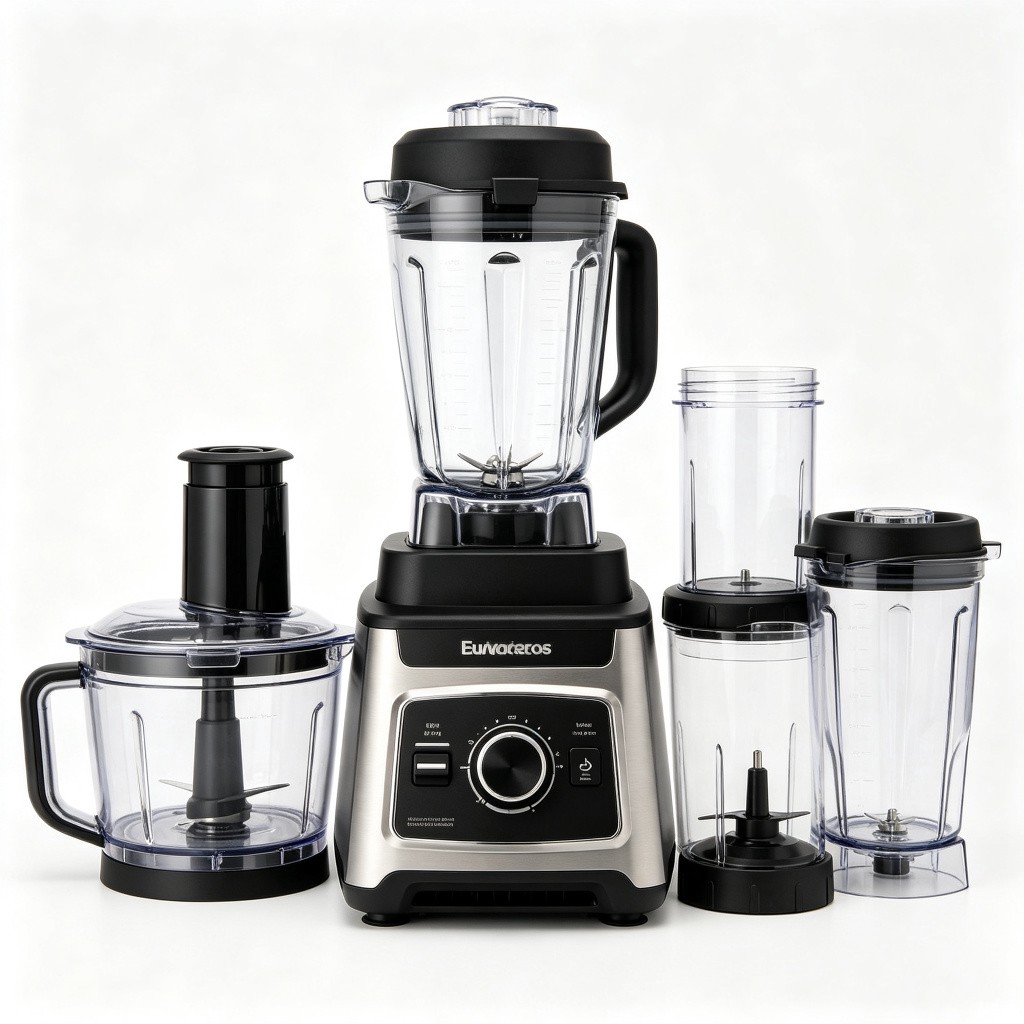
- Multi-purpose home cook: 64 oz high-performance blender with personal cup accessory. Covers both single servings and large batches.
If you're torn between two sizes, go slightly larger — you can always make less in a bigger jar, but you can't make more in a small one. The one exception is if you exclusively make single servings: in that case, a personal blender will outperform a larger one every time.
Pitcher Materials: Glass vs. Plastic vs. Stainless Steel
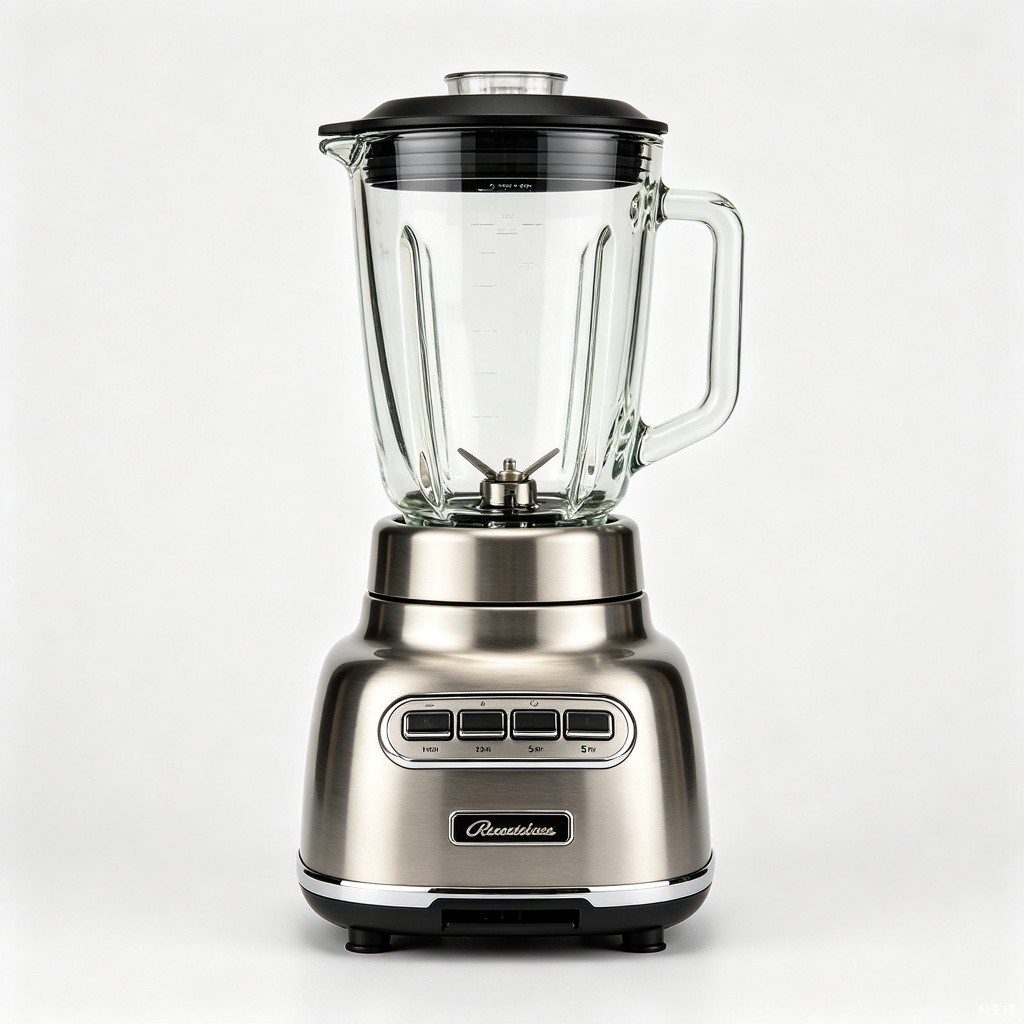
Capacity tells you how much a blender holds, but the material of the pitcher affects weight, durability, and how you use it. The three main options each have distinct trade-offs.
Glass Pitchers
Glass is the premium choice for many home cooks. It doesn't absorb odors or stains (tomato soup and turmeric won't leave a mark), it's dishwasher-safe, and it feels substantial and high-quality. The downside is weight — a full 64-ounce glass pitcher is heavy — and the risk of breaking if dropped. Glass is also not suitable for high-speed commercial blending of frozen ingredients, which is why most high-performance blenders use plastic or Tritan instead.
Plastic (Tritan) Pitchers
Tritan, a BPA-free copolyester, is the most common material in modern blenders. It's lightweight, shatter-resistant, and clear so you can see your ingredients. It's the standard for high-performance brands like Vitamix and Blendtec because it can withstand the force of high-speed blades. The main drawback is that it can scratch over time and may absorb odors from strongly flavored ingredients. Most Tritan pitchers are dishwasher-safe on the top rack.
Stainless Steel Pitchers
Stainless steel is durable, lightweight, and virtually unbreakable — but it's opaque, meaning you can't see your ingredients while blending. This makes it harder to judge consistency and stop at the right moment. Stainless steel pitchers are mostly found on commercial models and some specialty blenders. For home use, they're less common unless you prioritize durability over visibility.
Motor Power and Size: A Critical Correlation
Pitcher size and motor power are closely linked, and understanding this relationship is key to avoiding disappointment. A common mistake is buying a large-capacity blender with an underpowered motor — the result is a machine that struggles with full loads, overheats, and produces uneven results.
As a general rule, larger pitchers require more powerful motors to maintain blade speed under a heavier load. Here's how the two typically pair:
- Personal blenders (16–32 oz): 600–1200 watts. Sufficient for smoothies and protein shakes.
- Standard countertop (48–64 oz): 1000–1500 watts. Handles frozen fruit, ice, and hot soups.
- Large capacity (72+ oz): 1200–1800 watts. Powers through full pitchers of tough ingredients.
- Commercial (64–96 oz): 1500–2400 watts. Built for continuous, heavy-duty use.
If you see a 72-ounce blender with only 700 watts, be cautious — it may struggle to blend a full pitcher of frozen fruit. Conversely, a high-wattage motor in a small jar can be overkill and may even damage delicate ingredients. Match the motor to the capacity, and you'll get the best performance.
Space and Storage Considerations
Even the perfect capacity won't work if the blender doesn't fit in your kitchen. Before buying, consider three dimensions: countertop footprint, total height, and weight.
Most full-size blenders have a footprint of about 8×8 inches, but the base of high-performance models can be wider. Measure the space where you plan to keep it — ideally somewhere with an outlet nearby, since blenders are heavy and you won't want to move them frequently. Height is the bigger issue: a 64-ounce Vitamix with its pitcher attached stands about 17–20 inches tall, which may not fit under standard upper cabinets (typically 18 inches above the counter). If storage is tight, look for models with low-profile containers or consider a personal blender that stores in a drawer.
Weight matters too, especially if you plan to move the blender between the counter and a cabinet. A full-size countertop blender with a glass pitcher can weigh 10–15 pounds. If that's a concern, a Tritan plastic model will be several pounds lighter and much easier to maneuver.
Making Your Final Decision
To summarize, the right blender size comes down to matching capacity to your real-life habits. Start with your household size to estimate servings, then factor in how often you blend and what you make. Don't forget to check that the motor power matches the pitcher size, choose a pitcher material that suits your cleaning preferences, and verify the blender will actually fit in your kitchen.
When in doubt, a 64-ounce Tritan countertop blender with 1200–1500 watts is the most versatile all-around choice for the average household — big enough for families and batch cooking, small enough for single servings (above the minimum fill line), and powerful enough for almost any recipe. If you're a solo daily smoothie drinker, a 24-ounce personal blender will serve you better and save you time every single day.
Ready to compare specific models? Our team has tested over 35 blenders to find the best options at every size and price point. Check out our best blenders of 2026 to see which ones earned our top scores.
Find the Perfect Blender for Your Kitchen
Now that you know what size you need, let us help you pick the right model. We've tested over 35 blenders across every size and price range.
See Our Best Blender Reviews →