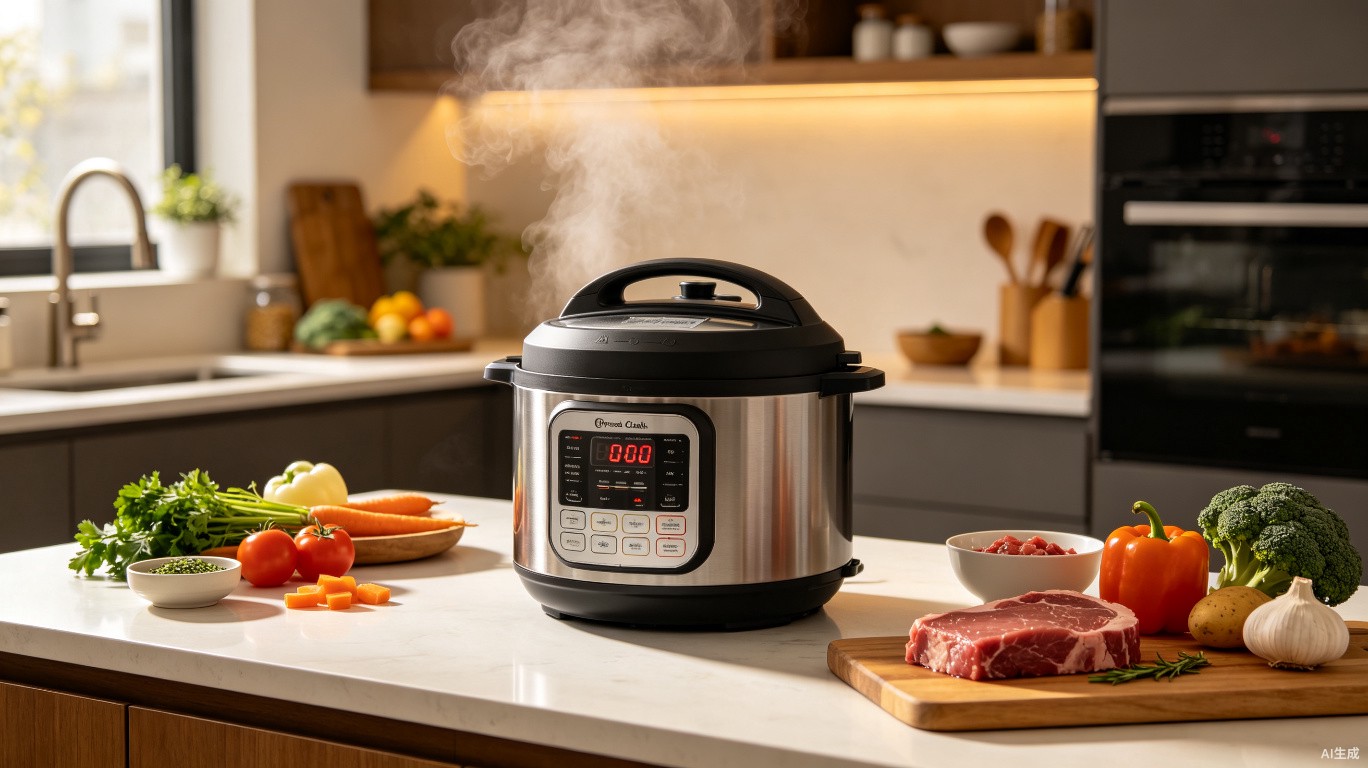
Walk into virtually any modern kitchen and you are likely to find one appliance that has transformed the way home cooks prepare meals: the pressure cooker. From compact stovetop models passed down through generations to sleek electric multi-cookers sitting proudly on countertops, pressure cookers have earned their reputation as one of the most versatile and time-saving kitchen appliances available today. According to the NPD Group, pressure cooker ownership in American households has grown by more than 40 percent since 2020, driven largely by the popularity of brands like Instant Pot and the rising interest in home cooking.
But what exactly is a pressure cooker? How does it transform tough cuts of meat into fork-tender delicacies in a fraction of the time required by conventional cooking? And with so many different types, features, and price points available in 2026, where should a first-time buyer even begin? In this comprehensive guide, we will answer every question you might have about pressure cookers — from the fascinating science behind how they work to the cutting-edge smart technology powering today's most advanced models.
What Exactly Is a Pressure Cooker?
A pressure cooker is a sealed cooking vessel that uses steam pressure to cook food faster than conventional methods. By trapping steam inside a tightly sealed pot, the internal temperature rises well above the normal boiling point of water (212°F / 100°C), reaching temperatures of up to 250°F (121°C) at standard operating pressure. This higher temperature dramatically accelerates the cooking process, reducing cooking times by as much as 70 percent compared to traditional boiling, braising, or steaming.
The core components of a pressure cooker include a pot (usually made of stainless steel or aluminum), a lid with a locking mechanism that creates an airtight seal, a pressure valve (also called a weight or regulator) that controls the internal pressure, a gasket (sealing ring) that ensures the seal between the lid and pot, and one or more safety mechanisms that prevent dangerous pressure buildup. Modern electric models add an electronic control board, heating element, sensors, and digital display to this foundation.
The basic principle is elegantly simple: liquid (water, broth, wine, or any cooking liquid) is placed in the pot along with the food. As the liquid heats up, it produces steam. Because the pot is sealed, the steam cannot escape, which causes the pressure inside to rise. This elevated pressure raises the boiling point of the liquid, allowing it to reach much higher temperatures than would normally be possible. The hot steam and liquid work together to cook food quickly and evenly, while also forcing moisture into the food, resulting in tender, flavorful dishes.
A Brief History of the Pressure Cooker
The story of the pressure cooker stretches back much further than most people realize. The fundamental principle of pressure cooking was first described by the French physicist Denis Papin in 1679. Papin, who was also known for his work on steam engines, invented a device he called the "Steam Digester" — a sealed vessel that used steam pressure to raise the boiling point of water and cook food more quickly. He even presented his invention to the Royal Society of London. While revolutionary in concept, the Steam Digester was far too dangerous for widespread use, as it lacked any reliable safety mechanism and could literally explode if the pressure became too great.
It was not until 1682 that Papin introduced a rudimentary safety valve to his design, allowing excess steam to escape and preventing catastrophic failure. However, pressure cookers remained largely a scientific curiosity for the next two and a half centuries. The technology was occasionally used in industrial applications, such as rendering animal fats and processing minerals, but it had not yet found its way into the home kitchen.
The first practical home pressure cooker was patented in 1919 by the Visser family in France, and the first commercial model was introduced by the National Pressure Cooker Company (later renamed Presto) in 1939. These early stovetop models became enormously popular during World War II, when food rationing made it essential to stretch tough, inexpensive cuts of meat and dried legumes into nutritious meals. By the 1950s, pressure cookers were found in a majority of American kitchens.
However, the 1960s and 1970s saw a decline in pressure cooker popularity, partly due to the rise of convenience foods and the microwave oven, and partly due to lingering safety concerns about older models that occasionally malfunctioned. The pressure cooker might have faded into obscurity entirely if not for a remarkable renaissance that began in the 1990s.
In 1991, a French engineer named Jean-Paul Poilane introduced a new generation of pressure cookers with dramatically improved safety features, including spring-loaded valves, multiple pressure release mechanisms, and interlocking lids that could not be opened while the pot was pressurized. European manufacturers like Kuhn Rikon, Fissler, and WMF led this revival, producing sleek, quiet, and remarkably safe stovetop pressure cookers.
Then came the electric revolution. In 2010, a Canadian company called Instant Brands launched the Instant Pot, an electric pressure cooker that combined the convenience of set-and-forget operation with multiple cooking functions (pressure cooking, slow cooking, sauteing, steaming, rice cooking, yogurt making, and warming) in a single appliance. The Instant Pot became a viral sensation, fueled by passionate social media communities that shared recipes and tips. By 2017, it was the best-selling kitchen appliance on Amazon. Today, in 2026, the electric pressure cooker and multi-cooker market is more vibrant than ever, with dozens of brands offering sophisticated appliances featuring smart connectivity, AI-assisted cooking programs, and app-controlled recipes.
How Does a Pressure Cooker Work?
The science behind pressure cooking is rooted in fundamental physics, specifically the relationship between pressure, temperature, and the boiling point of liquids. Understanding this relationship is the key to appreciating why pressure cookers are so effective.
The Science of Trapped Steam
At sea level, water boils at 212°F (100°C). Once water reaches its boiling point, adding more heat does not raise the temperature further — it simply causes the water to convert to steam (water vapor) more rapidly. This is why boiling food in an open pot cannot exceed 212°F, regardless of how high you turn up the burner.
A pressure cooker changes this equation by creating a sealed environment. When the pot is closed and heated, the steam produced by the boiling liquid is trapped inside. As more steam accumulates, the pressure inside the pot increases above atmospheric pressure. According to the principles of thermodynamics, as pressure increases, so does the boiling point of water. At the standard operating pressure of most modern pressure cookers (approximately 15 PSI above atmospheric pressure for stovetop models, or about 10-12 PSI for electric models), water boils at approximately 250°F (121°C).
This may seem like a modest increase in temperature, but it has a dramatic effect on cooking speed. As a general rule in food science, for every 18°F (10°C) increase in cooking temperature, chemical reactions (including the breakdown of proteins, starches, and fibers in food) proceed approximately twice as fast. The 38°F (21°C) increase provided by pressure cooking therefore accelerates cooking by a factor of roughly four to ten times, depending on the food. A dish that would require three hours of braising in a conventional oven can be completed in 30 to 45 minutes in a pressure cooker.
The Pressure Cooking Process Step by Step
Here is a detailed breakdown of what happens during a typical pressure cooking session:
- Sealing: The lid is locked onto the pot, creating an airtight seal via the silicone or rubber gasket. A small valve on the lid is initially open to allow air to escape.
- Heating: The heat source (stovetop burner or electric heating element) warms the liquid inside the pot. As the liquid temperature rises, it begins to produce steam.
- Pressurization: Once enough steam has accumulated to fill the pot, the valve is closed (either manually or automatically in electric models), and pressure begins to build. The rising pressure raises the boiling point of the liquid.
- Cooking: Once the target pressure is reached (indicated by the valve position, a gauge, or an electronic sensor), the cooking time begins. The temperature inside the pot remains constant at the elevated boiling point. The heat is reduced to maintain steady pressure without excessive steam release.
- Pressure Release: After the cooking time is complete, the pressure must be safely released before the lid can be opened. This can be done through natural release (allowing the pot to cool gradually, which takes 10 to 30 minutes), quick release (manually opening the valve to vent steam rapidly), or cold water release (running cold water over the lid of a stovetop model to condense the steam and drop the pressure quickly).
Types of Pressure Cookers
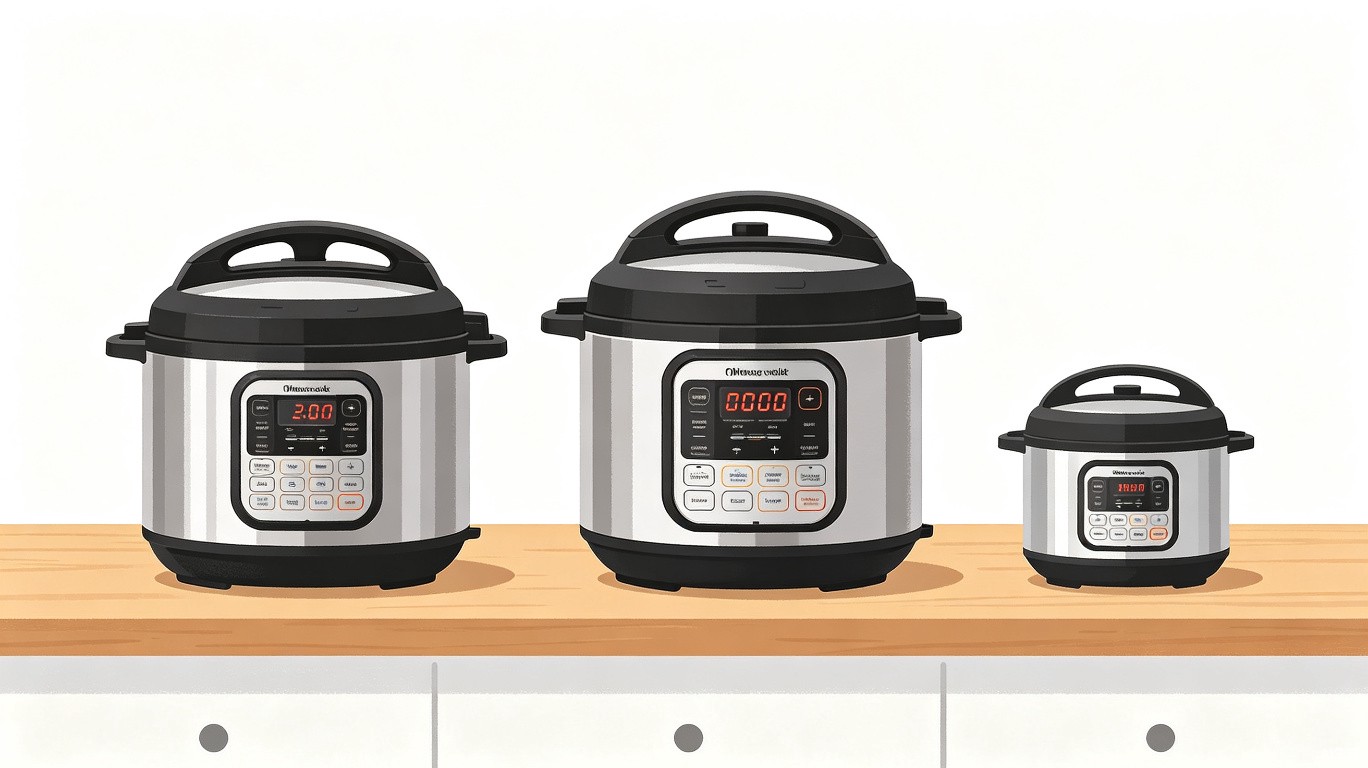
The pressure cooker market in 2026 offers three primary categories, each designed to meet different cooking styles, kitchen setups, and budgets.
- Stovetop pressure cookers: The classic design that sits on your range burner. These cookers reach higher pressures (up to 15 PSI) than electric models, cook slightly faster, and can be used for canning. They require more attention during use, as you must manually regulate the heat to maintain proper pressure. However, they are extremely durable, often lasting decades, and are preferred by many experienced cooks for their precise control and high heat output. Popular brands include Kuhn Rikon, Fissler, and Presto.
- Electric pressure cookers: Self-contained appliances with built-in heating elements, electronic controls, and automated pressure regulation. Simply add your ingredients, select a program, and the cooker handles the rest — heating, pressurizing, cooking for the set time, and then switching to a keep-warm mode. Electric models are generally quieter, safer, and more convenient than stovetop models, though they typically operate at slightly lower pressures (10-12 PSI). The Instant Pot brand dominates this category, but competitors like Ninja, Crock-Pot, and COSORI offer compelling alternatives.
- Multi-cookers: The evolution of the electric pressure cooker, multi-cookers combine pressure cooking with other cooking methods such as air frying, slow cooking, steaming, sauteing, yogurt making, rice cooking, and even bread proofing in a single appliance. The Instant Pot Duo Evo Plus, Ninja Foodi, and Cosori 12-in-1 are popular examples. These are ideal for cooks who want maximum versatility from a single countertop appliance and are willing to accept that the pressure cooking function may not be quite as powerful as a dedicated stovetop model.
We explore every pressure cooker type in much greater detail — including pros, cons, price ranges, and ideal use cases — in our comprehensive types of pressure cookers guide.
Key Features and Specifications to Understand
When shopping for a pressure cooker, you will encounter a variety of technical specifications and feature names. Understanding what these mean will help you compare models effectively and avoid paying for features you will never use.
PSI (Pounds Per Square Inch)
PSI measures the internal pressure the cooker can generate. Higher PSI means higher cooking temperatures and faster cooking times. Most stovetop pressure cookers operate at 15 PSI (reaching 250°F), while electric models typically operate at 10-12 PSI (reaching 230-244°F). Some premium electric models offer a "high" pressure setting that reaches closer to 13 PSI. While the difference in cooking time between 10 PSI and 15 PSI is noticeable (roughly 10-15 percent faster at 15 PSI), both produce excellent results for most recipes.
Capacity (Quarts)
Pressure cooker capacity is measured in quarts (or liters) and indicates how much food the pot can hold. Common sizes range from 3 quarts (suitable for 1-2 people or side dishes) to 8 quarts (ideal for large families or batch cooking). The most popular size is 6 quarts, which is large enough for most families and compatible with the widest range of recipes. When choosing a size, remember that you should never fill a pressure cooker more than two-thirds full (or half full for foods that expand, like rice and beans), so the usable capacity is significantly less than the stated capacity.
Cooking Presets and Programs
Modern electric pressure cookers and multi-cookers offer a variety of preset cooking programs: meat/stew, bean/chili, soup/broth, rice, poultry, yogurt, slow cook, saute, steam, and more. Each preset automatically adjusts the cooking pressure, temperature, and time for the specific food type. While these presets are convenient, most experienced users find that they prefer to set the time and pressure manually after learning what works best for their favorite recipes. Do not let a long list of presets sway your decision — focus instead on the build quality, safety features, and capacity.
Safety Mechanisms
Modern pressure cookers are remarkably safe, incorporating multiple redundant safety systems that make the catastrophic failures of older models essentially impossible. Key safety features include:
- Locking lid: The lid cannot be opened while the pot is pressurized, preventing accidental steam burns.
- Primary pressure valve: Regulates internal pressure by releasing steam when the target pressure is exceeded.
- Secondary pressure release: A backup vent or melt plug that activates if the primary valve becomes blocked.
- Anti-blockage shield: A mesh or screen that prevents food particles from clogging the pressure valve.
- Overpressure release: If pressure exceeds safe limits, the gasket is designed to deform and create a gap for steam to escape, preventing explosion.
- Temperature sensors (electric models): Continuously monitor internal temperature and automatically adjust heating to prevent overheating.
- Lid detection (electric models): The cooker will not begin pressurizing unless the lid is properly sealed and locked.
Health and Nutrition Benefits
Beyond the obvious advantage of speed, pressure cooking offers several notable health and nutrition benefits that make it one of the healthiest cooking methods available.
Nutrient retention is one of the most compelling advantages of pressure cooking. Because food cooks faster and in a sealed environment, fewer water-soluble vitamins (particularly vitamin C and B vitamins) are destroyed by prolonged heat exposure or leached into cooking water that is later discarded. A study published in the Journal of Food Science found that pressure cooking retained significantly more vitamin C in broccoli compared to boiling, and comparable levels to steaming, while requiring a fraction of the cooking time. Similarly, research published in the journal Nutrition has shown that pressure cooking preserves more folate, iron, and zinc in legumes compared to conventional boiling.
Reduced anti-nutrients is another benefit, particularly for those who eat a plant-based diet. Many grains, legumes, and seeds contain compounds called anti-nutrients (such as phytic acid and lectins) that can interfere with mineral absorption and cause digestive discomfort. Pressure cooking has been shown to reduce phytic acid content by up to 50 percent and effectively deactivate lectins, making the nutrients in these foods more bioavailable and easier to digest.
Lower sodium cooking is achievable because the intense flavors developed under pressure mean you need less salt to make dishes taste rich and satisfying. The sealed environment also means that volatile flavor compounds that would normally evaporate during long cooking are trapped and reabsorbed into the food, resulting in deeper, more complex flavors without the need for excess seasoning.
Energy efficiency also contributes indirectly to health and environmental well-being. Pressure cookers use significantly less energy than conventional ovens or stovetop cooking, because the cooking time is dramatically shorter and the sealed environment minimizes heat loss. An electric pressure cooker uses roughly one-third the energy of a conventional oven for comparable dishes. This reduced energy consumption translates to lower utility bills and a smaller carbon footprint.
Healthier cooking methods are facilitated by the pressure cooker's versatility. You can steam vegetables to perfect tenderness in just 2-3 minutes, cook whole grains without soaking, prepare homemade bone broth rich in collagen and minerals in under two hours, and make tender, flavorful dishes with minimal added fat. The ability to saute or brown ingredients directly in the pot before pressure cooking also means you can develop complex flavors with less oil than traditional methods require.
Ready to Find Your Perfect Pressure Cooker?
Now that you understand what a pressure cooker is, how it works, and what features matter most, it is time to find the right appliance for your kitchen. We have tested dozens of top models to help you choose with confidence.
See Our Best Pressure Cooker Reviews →