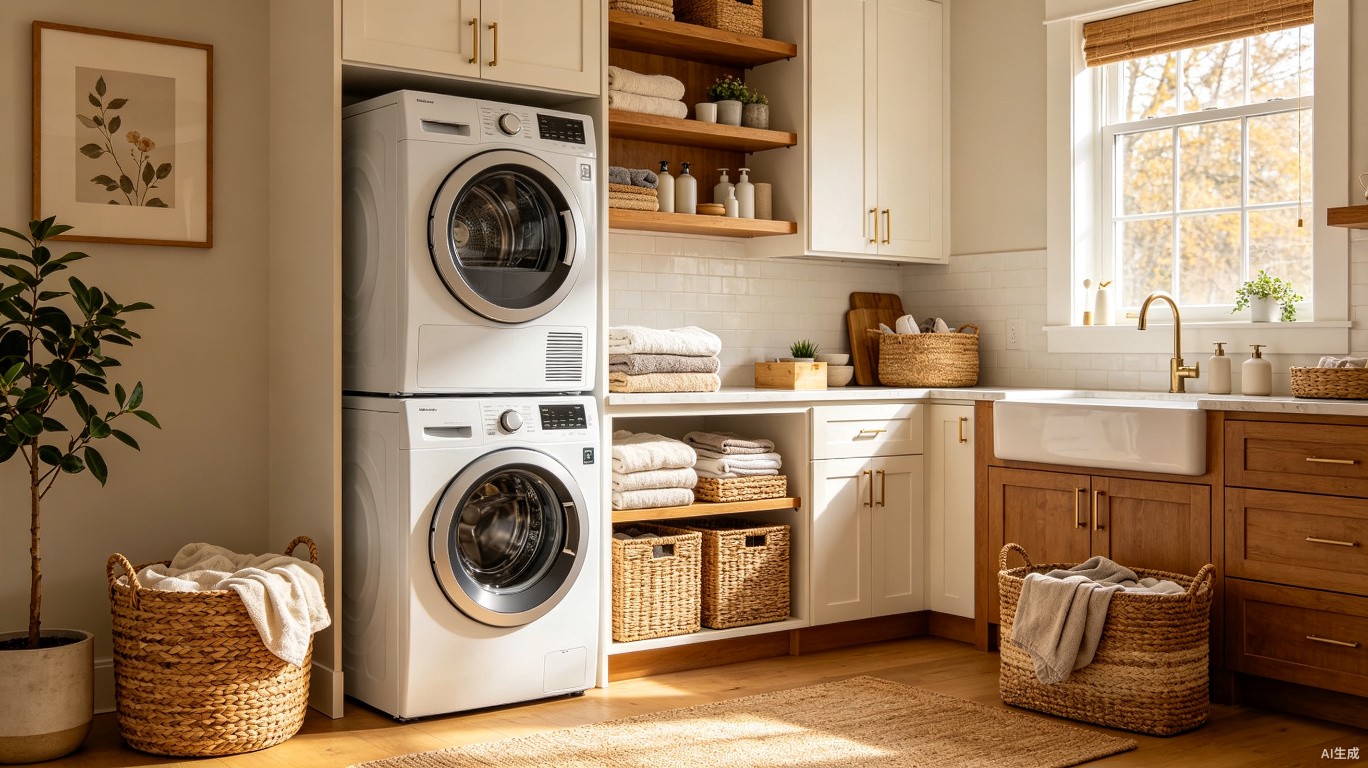
When you picture a laundry setup, you probably imagine a matching pair: a washing machine on one side and a dryer on the other, standing side by side or stacked in a dedicated laundry closet. This configuration is so standard in American homes that it can feel like the only option. But does it have to be? If you are setting up a new home, moving into your first apartment, or trying to save money on appliances, the question of whether you really need both a washer and a dryer is worth examining carefully.
The short answer is that a washing machine is essentially non-negotiable for most households, while a dryer is more of a convenience than a necessity. However, the full picture is more nuanced. In this guide, we will explore the benefits of owning both appliances, the viable alternatives to a standalone dryer, how space constraints affect the decision, a detailed cost analysis, and energy efficiency considerations to help you make the right choice for your situation.
Why a Washing Machine Is Essential
Let us start with the appliance that is nearly impossible to live without. A washing machine automates what would otherwise be hours of physically demanding hand-washing. For households that generate multiple loads of laundry per week (the average American family does approximately 8 to 10 loads per week), a washing machine is not a luxury — it is a practical necessity.
Beyond convenience, washing machines offer cleaning performance that hand-washing simply cannot match. The combination of controlled water temperature, precisely timed agitation, and specialized cycles for different fabric types ensures that clothes are cleaned thoroughly and consistently. Modern washers also offer sanitization cycles, allergen removal, and steam treatment that go far beyond what is achievable by hand.
The only realistic alternative to owning a washing machine is using a laundromat or shared laundry facility. While this works for some people, it comes with its own costs in terms of money per load, travel time, waiting for available machines, and transporting laundry to and from the facility. For anyone doing more than a few loads per month, owning a washing machine almost always makes financial and practical sense.
The Case for Owning a Dryer
While a dryer is not strictly essential (more on alternatives below), there are compelling reasons why the vast majority of households choose to own one.
Speed and Convenience
A dryer can take a load of wet laundry from sopping wet to completely dry in 30 to 60 minutes. Line drying the same load outdoors typically takes 2 to 6 hours depending on weather conditions, and indoor drying on a rack can take 12 to 24 hours or more, especially in humid climates or during winter months. If you do multiple loads per week, the time savings from owning a dryer add up to several hours every week. For busy families, working professionals, and anyone who values their time, this convenience is significant.
Weather Independence
Line drying is at the mercy of the weather. Rain, high humidity, cold temperatures, and winter conditions can all prevent outdoor drying or dramatically extend drying times. Even with an indoor drying rack, you are dependent on adequate ventilation and ambient temperature. A dryer works the same way regardless of what the weather is doing outside, giving you consistent, predictable results year-round.
Softness and Wrinkle Reduction
The tumbling action of a dryer naturally softens fabrics as they dry, which is why tumble-dried towels and t-shirts feel softer than line-dried ones (line-dried fabrics can feel stiff due to the fibers setting in place as they air-dry). Many dryers also offer wrinkle-prevention or wrinkle-release settings that tumble clothes without heat after the drying cycle is complete, keeping garments smooth and reducing the need for ironing.
Allergen and Sanitization Benefits
The high heat of a dryer cycle (typically 135°F to 150°F on regular settings) kills dust mites, bacteria, and other allergens that may survive the wash cycle. For households with allergy sufferers, the combination of a hot wash followed by a hot dry cycle provides the most thorough sanitization available in home laundry care. Dryer sheets and dryer balls can also help trap pet hair and lint during the drying cycle, removing allergens that washing alone may not fully address.
Alternatives to a Standalone Dryer
If you decide that a standalone dryer is not right for your situation, there are several viable alternatives. Each has trade-offs, but for the right household, any of these can work well.
Line Drying (Outdoor)
The oldest and most energy-efficient drying method is also the simplest: hanging clothes on a clothesline or outdoor drying rack. Line drying costs nothing in energy, is gentle on fabrics (no heat damage), and gives clothes a fresh, sun-dried scent that no dryer sheet can replicate. Ultraviolet sunlight also has natural disinfecting properties. The downsides are weather dependence, longer drying times, potential stiffening of fabrics, and the fact that clotheslines are restricted or prohibited in some neighborhoods and apartment complexes.
Indoor Drying Racks
Foldable drying racks are an inexpensive and space-efficient alternative. They can be set up in a bathroom, laundry room, or any well-ventilated area. In warm, dry climates or homes with good air circulation, indoor drying works well year-round. In humid climates, you may need to supplement with a fan or dehumidifier to prevent musty odors. The main drawbacks are the space the rack occupies while in use and the longer drying times compared to a machine dryer.
Washer-Dryer Combo Units
As discussed in our types of washing machines guide, combo units wash and dry in the same drum. They are ideal for very small spaces where separate machines are impractical. The trade-offs include longer total cycle times, reduced drying capacity, and higher upfront cost. But if your choice is between a combo unit and no dryer at all, the combo offers a genuine drying solution without requiring additional floor space or venting.
Laundromat Services
If you do not want to invest in either a washer or a dryer (or if your living situation makes installation impractical), laundromats provide both machines on a pay-per-use basis. Modern laundromats often feature high-capacity, commercial-grade machines that can handle large loads quickly. The cost per load varies by location but typically ranges from $3 to $8 for washing and $2 to $6 for drying. For someone doing 2 to 3 loads per week, the annual cost of laundromat drying alone would be approximately $200 to $900 — enough that investing in a home dryer starts to look financially attractive.
Space Considerations for Apartments and Small Homes
Space is often the deciding factor in whether households can accommodate both a washer and a dryer. Here is a practical breakdown of what you need to know.
Standard full-size washer and dryer pairs each measure approximately 27 inches wide, 32 to 34 inches deep, and 38 to 40 inches tall. Placed side by side, they require a space roughly 54 inches (4.5 feet) wide and 32 inches deep. Stacked vertically (which requires a front-load pair and a stacking kit), they occupy roughly 27 by 32 inches of floor space — about the footprint of a single machine. Many apartment closets and dedicated laundry alcoves are designed for this stacked configuration.
Compact washer and dryer pairs are typically 24 inches wide and can also be stacked, reducing the footprint to just 24 by 24 inches of floor space. These are ideal for apartments with limited laundry closet space.
Portable washers require no dedicated space at all — they connect to a faucet and can be stored in a closet or under a counter when not in use. Pairing a portable washer with a foldable drying rack is a viable solution for studio apartments and dorm rooms.
Important considerations: Dryers require either an external vent (for vented models) or adequate room ventilation (for ventless condensation or heat pump models). If your space does not have a dryer vent, you will need to choose a ventless dryer, a combo unit, or forego machine drying entirely. Ventless dryers are widely available but tend to be more expensive and have longer drying times than vented models.
Cost Analysis: Is a Dryer Worth the Investment?
Let us break down the numbers to understand the true cost of owning a dryer versus the alternatives.
Upfront Cost
- Budget electric dryer: $200–$400
- Mid-range electric dryer: $400–$700
- Premium electric dryer: $700–$1,200
- Budget gas dryer: $350–$600
- Mid-range gas dryer: $600–$1,000
- Ventless/heat pump dryer: $800–$1,800
- Drying rack (alternative): $20–$60
- Washer-dryer combo: $1,000–$2,500
Annual Operating Cost
- Electric dryer: $80–$150 per year (based on 5–7 loads per week)
- Gas dryer: $50–$100 per year (gas is typically cheaper per BTU)
- Heat pump dryer: $40–$80 per year (significantly more efficient)
- Line drying: $0 per year
- Laundromat drying: $200–$900 per year (depending on frequency and local prices)
Long-Term Value
Over a typical 10- to 13-year lifespan, a mid-range electric dryer costing $500 with annual operating costs of $100 per year represents a total cost of ownership of approximately $1,500 to $1,800. Compare this to laundromat drying at $400 per year for 10 years ($4,000 total), and the home dryer becomes the clear financial winner for anyone doing regular laundry at home.
Even compared to a simple $30 drying rack, the dryer's value proposition is strong when you factor in the time saved, the convenience of weather-independent drying, and the superior fabric softness and wrinkle reduction. The drying rack wins on pure cost, but the dryer wins on nearly every other measure.
Energy Efficiency Comparison
Energy efficiency is an increasingly important consideration, both for environmental reasons and for long-term cost savings. Here is how the different drying options compare.
Standard vented electric dryers are the least efficient option. They heat air using electric resistance elements and then blow that hot air through the wet clothes, venting the warm, moist air outside. This process wastes a significant amount of energy because the heated air is simply expelled. A standard electric dryer uses approximately 2,000 to 6,000 watts per hour of operation.
Gas dryers use natural gas or propane to generate heat, which is typically cheaper and produces less carbon emissions than electric resistance heating (depending on your local energy mix). They dry clothes at similar speeds to electric models but at a lower operating cost.
Heat pump dryers represent the most energy-efficient drying technology available. Instead of generating heat and venting it away, they use a refrigeration cycle to recycle hot air, extracting moisture through condensation and reheating the air for the next pass. This closed-loop system uses approximately 50 percent less energy than a standard vented dryer. While the upfront cost is higher ($800 to $1,800), the energy savings can recoup the price premium within 3 to 5 years for households that dry frequently. Heat pump dryers also do not require external venting, making them ideal for apartments and homes where vent installation is impractical.
Line drying and air drying are, of course, the most energy-efficient options since they use zero electricity. From a purely environmental standpoint, air drying is always the greenest choice. However, the practical trade-offs in terms of time, convenience, and consistency mean that many households prefer the efficiency of a modern heat pump dryer over the zero-energy but time-intensive approach of line drying.
Our Verdict: Who Needs Both, and Who Can Skip the Dryer?
You should own both a washer and a dryer if: You have a family of three or more, you do 5 or more loads per week, you live in a climate with long winters or frequent rain, you value convenience and time savings, or you have the space and budget for both appliances. For most full-time households, the combination of a washer and dryer is the gold standard for home laundry care.
You can skip the dryer if: You live alone or with one other person and do only 1 to 3 loads per week, you have access to a sunny outdoor space for line drying, you live in a warm, dry climate where air drying is fast and effective, you are on a very tight budget and need to prioritize the washer purchase, or you have access to a laundromat with dryers for occasional use.
Consider a combo unit if: You want the convenience of machine drying but lack space for separate machines, you live in an apartment without dryer venting, or you want an all-in-one solution for a tiny home or RV.
Ultimately, a washing machine is an essential appliance for virtually every household. A dryer is a significant convenience that most households will find worth the investment, but it is not absolutely necessary if you have viable alternatives. The right choice depends on your specific circumstances: your budget, your space, your climate, your household size, and how much you value your time.
Ready to Choose Your Laundry Setup?
Whether you decide on a full washer-dryer pair, a compact combo unit, or a washer with air drying, we have the reviews and guides to help you make the best choice.
See Our Best Washer Reviews →