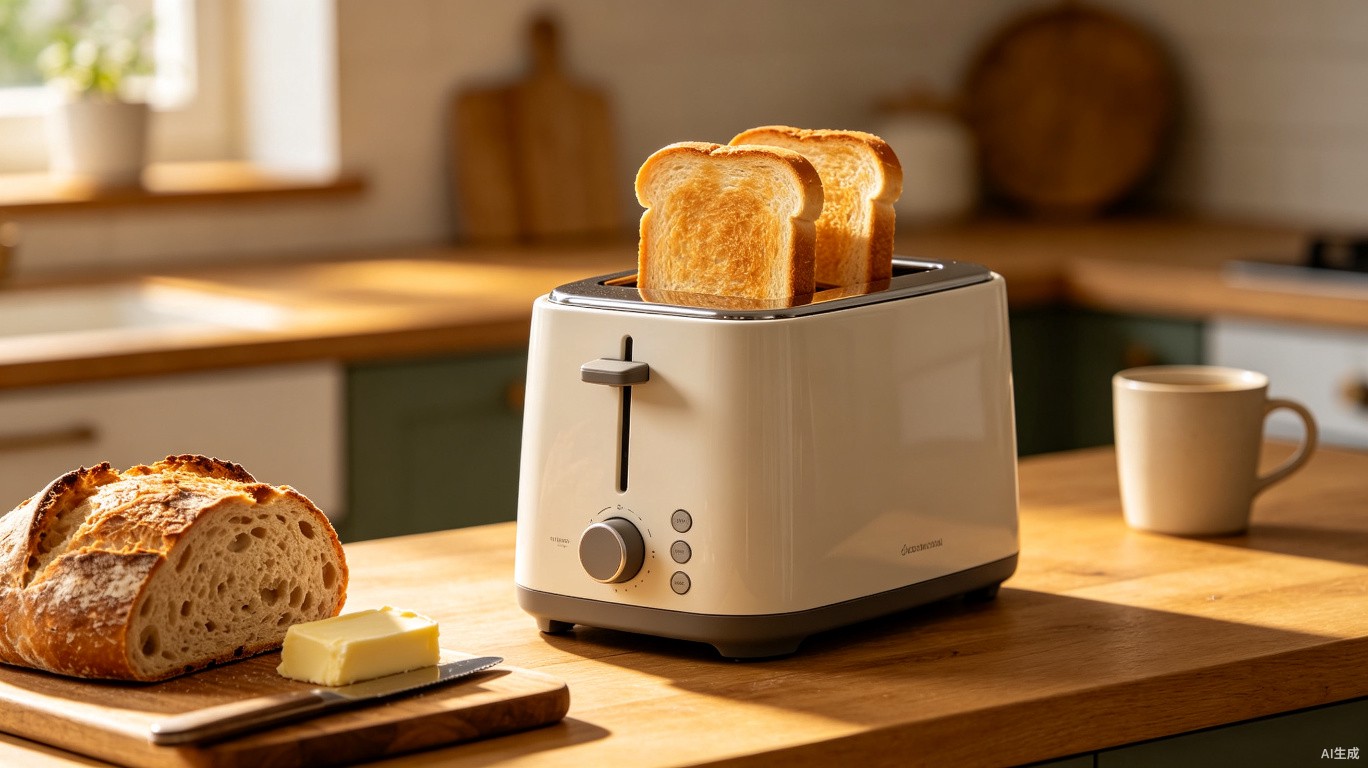
Walk into virtually any kitchen in the world and you'll find one appliance that's almost universally present: the toaster. From compact two-slot models tucked into apartment kitchenettes to sprawling toaster ovens that can bake an entire chicken, toasters have earned their place as one of the most essential and beloved kitchen appliances in modern homes.
But what exactly is a toaster? How does it transform a soft slice of bread into a golden, crispy piece of perfection? And with so many different types, features, and price points available today, where should a first-time buyer even begin? In this comprehensive guide, we'll answer every question you might have about toasters — from the science behind the toast to choosing the right model for your kitchen.
What Exactly Is a Toaster?
A toaster is a small kitchen appliance designed to brown bread and other baked goods by exposing them to radiant heat. The core concept is elegantly simple: heating elements generate intense thermal energy, which is directed at the surface of the bread, triggering a chemical reaction called the Maillard reaction that transforms the bread's surface into something golden, crunchy, and deeply flavorful.
Unlike ovens, which heat a large enclosed space, toasters concentrate their heat in a small, focused area. This means they can brown the surface of a slice of bread in just one to four minutes — far faster than a conventional oven could achieve. The result is toast: bread with a crisp, browned exterior and a soft, warm interior.
Modern toasters are remarkably versatile appliances. Beyond standard sandwich bread, they can handle bagels, English muffins, waffles, frozen pastries, toaster strudels, and even reheating leftover pizza. Many models feature dedicated settings for defrosting frozen bread, reheating toast without further browning, and specialized bagel modes that toast only the cut side.
A Brief History of the Toaster
The desire to toast bread is ancient — humans have been holding slices of bread over open flames since the dawn of civilization. The word "toast" itself comes from the Latin word tostus, meaning "to burn" or "to scorch." For centuries, toasting was a rudimentary process involving long-handled forks or wire frames held over a fire or hot coals.
The first major technological breakthrough came in 1893, when the first electric toaster was invented. This early model, produced by the British company Crompton & Co., used iron wires as heating elements and could only toast one side of the bread at a time. Users had to manually flip the bread halfway through the process. These early toasters were expensive luxuries, affordable only to the wealthy.
The next transformative invention arrived in 1919, when Charles Strite, a mechanic from Minnesota, patented the first automatic pop-up toaster. Strite was reportedly frustrated with the burnt toast and smoky atmosphere at his company cafeteria, where a standard bread-browning device constantly produced charred results. His invention used a spring-loaded mechanism and a timer to eject the toast automatically when it reached the desired level of browning — eliminating the need for constant monitoring and manual flipping.
In 1926, the Toastmaster brand introduced the first commercially successful pop-up toaster for home use. It was an instant sensation. The Toastmaster's ability to produce perfectly browned toast with zero effort captured the imagination of the American public, and the pop-up toaster quickly became a kitchen staple. The basic design — vertical slots with internal heating elements and a spring-loaded pop-up mechanism — remains largely unchanged nearly a century later.
The decades that followed brought incremental innovations: wider slots for thick-cut and artisan bread, bagel-specific settings, stainless steel exteriors, digital controls, and the rise of the toaster oven as a versatile countertop alternative. Today's toasters are more capable, efficient, and stylish than anything Charles Strite could have imagined.
How Does a Toaster Work?
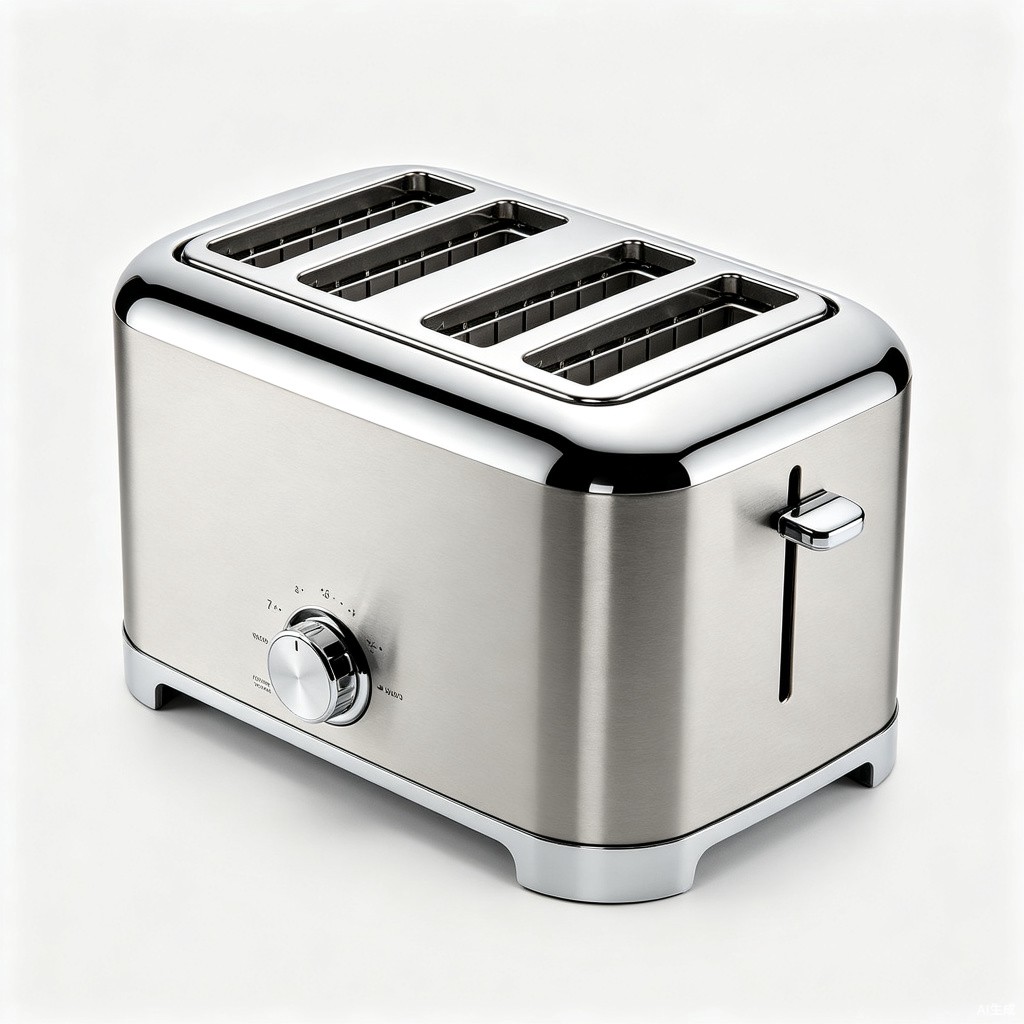
Despite their apparent simplicity, toasters are cleverly engineered devices that rely on well-understood principles of physics and materials science. Here's a step-by-step look at how a standard pop-up toaster transforms bread into toast.
- Heating elements — nichrome wire: Inside every toaster, you'll find thin ribbons of a metal alloy called nichrome (a combination of nickel and chromium). Nichrome wire is the key component: it has high electrical resistance, which means it heats up dramatically when electricity flows through it. These wires are wound around mica or ceramic insulating panels positioned on either side of each toaster slot. When you push down the lever, electricity flows through the nichrome wires, causing them to glow red-hot — typically reaching temperatures between 1,100°F and 1,200°F (600–650°C).
- Radiant heat transfer: The glowing nichrome wires emit intense infrared radiation — a form of electromagnetic energy that transfers heat directly to the bread's surface without needing to heat the air in between. This is why you can feel the heat from a toaster even without touching it. The radiant energy is absorbed by the bread's surface, rapidly raising its temperature.
- The Maillard reaction: As the bread's surface temperature climbs past approximately 300°F (150°C), the Maillard reaction kicks in. This is a complex chemical reaction between amino acids and reducing sugars in the bread that produces hundreds of new flavor compounds, gives the bread its golden-brown color, and creates the satisfying crispy texture we associate with good toast. If the temperature continues climbing past 350°F (177°C), the bread begins to carbonize — which is what we call burning.
- Browning control: The browning dial on your toaster controls how long the bread is exposed to the heating elements. A lower setting (lighter toast) means a shorter toasting cycle; a higher setting (darker toast) means a longer one. The dial adjusts a timer circuit that determines when the toast is done.
- Timer and pop-up mechanism: In a standard pop-up toaster, a timer circuit (often a simple bimetallic strip or electronic timer) tracks the toasting duration. When the set time elapses, the circuit releases a latch, and a spring pushes the toast up and out of the slots. This pop-up action serves two purposes: it makes the toast easy to grab, and it moves the bread away from the heating elements to stop the cooking process immediately.
The entire process takes between one and four minutes depending on the toaster's wattage and your browning preference. Higher-wattage toasters (typically 1,500W and above) toast faster and more evenly than lower-wattage models.
The Main Types of Toasters
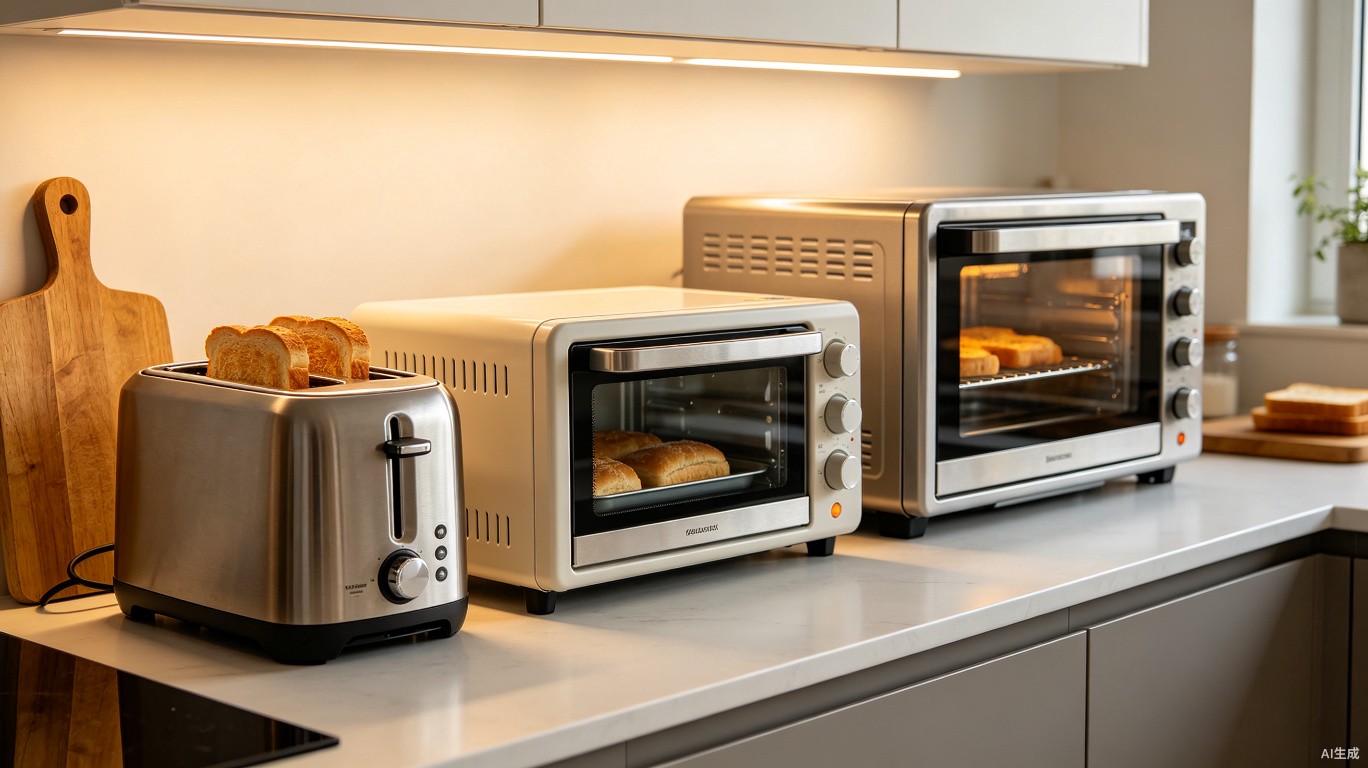
While the basic toasting principle remains the same, modern toasters come in several distinct form factors, each designed for different needs and cooking styles.
- Pop-up toasters: The classic vertical-slot design that most people think of when they hear "toaster." Bread is inserted vertically into slots, and the toast pops up when done. Fast, compact, and ideal for bread, bagels, and waffles. Best for people who want quick, no-fuss toast every morning.
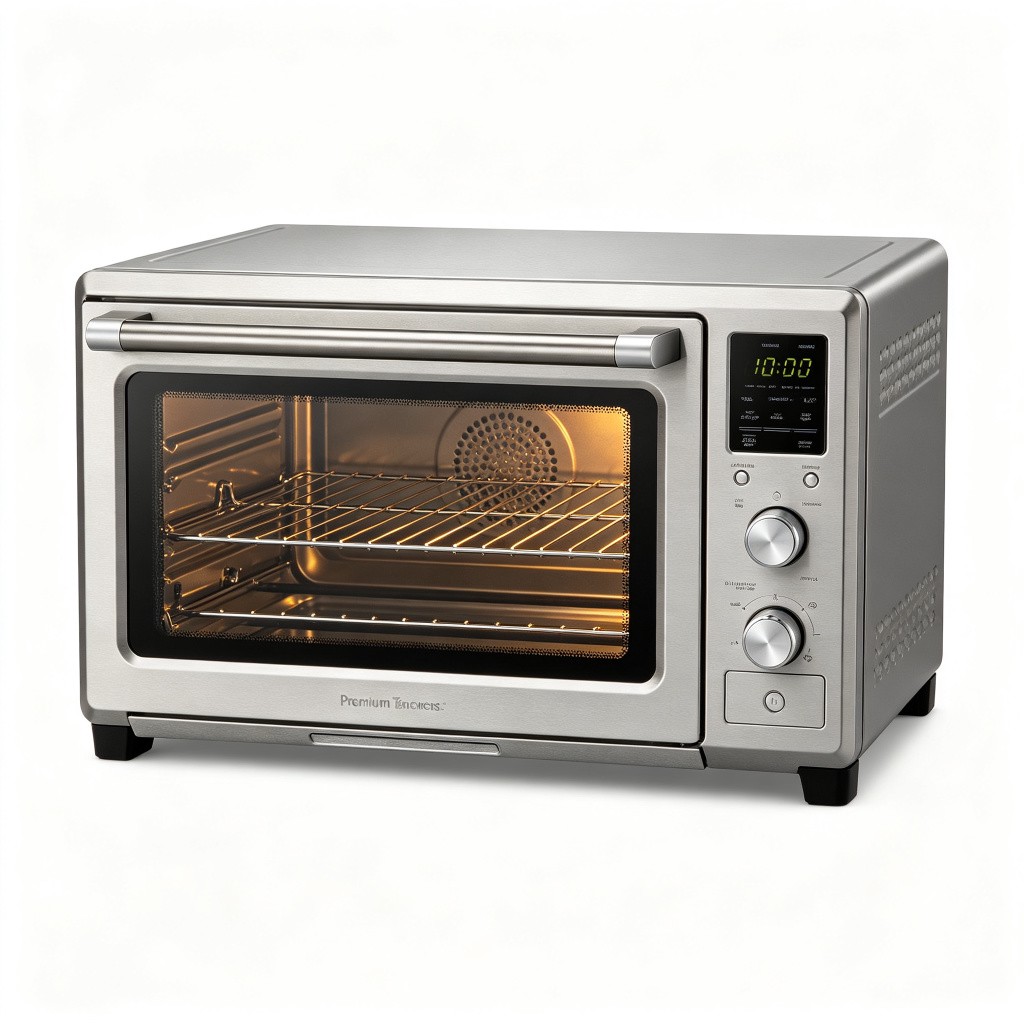
- Toaster ovens: A compact oven with a horizontal door that opens downward. Uses the same heating principles as a full-size oven but in a smaller form factor. Can toast, bake, broil, and reheat. Much more versatile than a pop-up toaster but takes up more counter space and takes longer to toast bread.
- Convection toaster ovens: A toaster oven equipped with a built-in fan that circulates hot air throughout the cavity. This forced-air convection produces faster, more even cooking and browning. Can often replace a full-size oven for small meals while using less energy.
- Sandwich makers / melting toasters: Specialized devices with hinged plates that close over the bread, toasting both sides simultaneously and melting cheese or other fillings in the middle. Perfect for grilled cheese sandwiches, paninis, and warm snack melts.
We explore every toaster category in much greater detail — including pros, cons, price ranges, and ideal use cases — in our comprehensive types of toasters guide.
Common Toaster Features Explained
Before we discuss why you need a quality toaster, it helps to understand the features you'll encounter when shopping. Most modern toasters include a browning control dial (typically 5–7 settings), a cancel button for stopping the cycle at any time, and a removable crumb tray for easy cleanup. Many mid-range and premium models add a bagel setting that toasts only the inner cut side, a defrost function that thaws and toasts frozen bread in one cycle, and a reheat button that warms toast without further browning. Some high-end models feature digital displays, motorized lift mechanisms, and even smart connectivity.
Why You Should Own a Quality Toaster
If you've been toasting bread under a broiler or in a full-size oven, you already know it's not the same experience. A dedicated toaster isn't just a luxury — it's a practical investment that pays dividends every single morning. Here's why bringing a quality toaster into your kitchen is worth it.
Speed and Convenience
A good toaster produces perfect toast in under two minutes — faster than boiling water for tea. There's no preheating, no waiting for the oven to come up to temperature. Just drop in your bread, push the lever, and your toast is ready before you've finished buttering the last piece. For busy weekday mornings, nothing else comes close.
Consistent Results Every Time
Quality toasters deliver even, predictable browning every single time. No more burnt edges and pale centers. Once you find your preferred browning setting, you can reproduce it morning after morning with zero guesswork. A cheap toaster might scorch one side while leaving the other pale, but a well-engineered model produces uniform, restaurant-quality toast day after day.
Energy Efficiency
A toaster uses significantly less energy than heating up a full-size oven. A typical pop-up toaster uses 800–1,500 watts for 1–3 minutes, while an oven uses 2,000–5,000 watts for 10–15 minutes of preheating alone. Over a year of daily use, the energy savings add up — and you'll keep your kitchen cool in the process, since a toaster generates far less ambient heat than a full oven.
Versatility Beyond Bread
Modern toasters go far beyond basic bread. With settings for bagels, frozen waffles, English muffins, pastries, and reheating, a quality toaster becomes one of the most versatile appliances on your countertop. Many models include a cancel button for stopping mid-cycle, a crumb tray for easy cleanup, and an extra-wide slot that accommodates thick-cut artisan loaves.
How to Choose Your First Toaster
Choosing your first toaster doesn't have to be overwhelming. Start by answering these five questions, and you'll quickly narrow down the field to the right model for your needs.
- What's your budget? Basic 2-slice pop-up toasters start around $20–$30, with quality models in the $40–$80 range. Premium toasters from brands like Breville and KitchenAid can cost $100–$200. Toaster ovens range from $40 for basic models to $300+ for premium convection units. For a first toaster, plan to spend at least $30–$60 for a pop-up or $60–$150 for a toaster oven that will last and perform well.
- How many slots do you need? A 2-slice toaster is perfect for individuals or couples. A 4-slice model is better for families or anyone who regularly toasts multiple slices at once. Keep in mind that 4-slice toasters are wider but not necessarily taller — they just have two additional slots.
- What features matter to you? Consider which extras you'll actually use: bagel settings (toast one side only), defrost functions (thaw and toast frozen bread in one cycle), reheat mode (warm toast without further browning), extra-wide slots (for thick artisan bread), and a cancel button for stopping mid-cycle. Don't pay for features you'll never touch.
- How much counter space do you have? Pop-up toasters are generally compact, with 2-slice models taking up about 7×10 inches of counter space. Toaster ovens require significantly more room — typically 16×14 inches or larger. Measure your available space before buying, and consider whether you'll leave the toaster on the counter permanently or store it away.
- What type of bread do you eat? If you primarily eat standard sandwich bread, any toaster will work fine. If you love thick-cut artisan bread, bagels, or English muffins, look for models with extra-wide slots and a bagel setting. If you frequently toast frozen waffles or pastries, a defrost function is essential.
For most people, a quality 4-slice pop-up toaster in the $50–$100 range offers the best combination of performance, convenience, and value. If you want more versatility and don't mind a larger footprint, a compact toaster oven in the $80–$150 range is an excellent choice.
One final tip: don't overlook the importance of build quality and warranty. A well-made toaster from a reputable brand will last for many years of daily use, while a cheaply built model may fail within months. Look for stainless steel construction, a solid lever mechanism, and a warranty of at least one year. Reading customer reviews can also reveal common issues that aren't obvious from the product description alone.
Ready to compare specific models? Our team has tested dozens of toasters across every category and price point. Check out our best toasters of 2026 roundup to see which models earned our highest ratings.
Ready to Find Your Perfect Toaster?
Now that you understand what a toaster is and how it works, it's time to find the right appliance for your kitchen. We've tested dozens of top models to help you choose with confidence.
See Our Best Toaster Reviews →