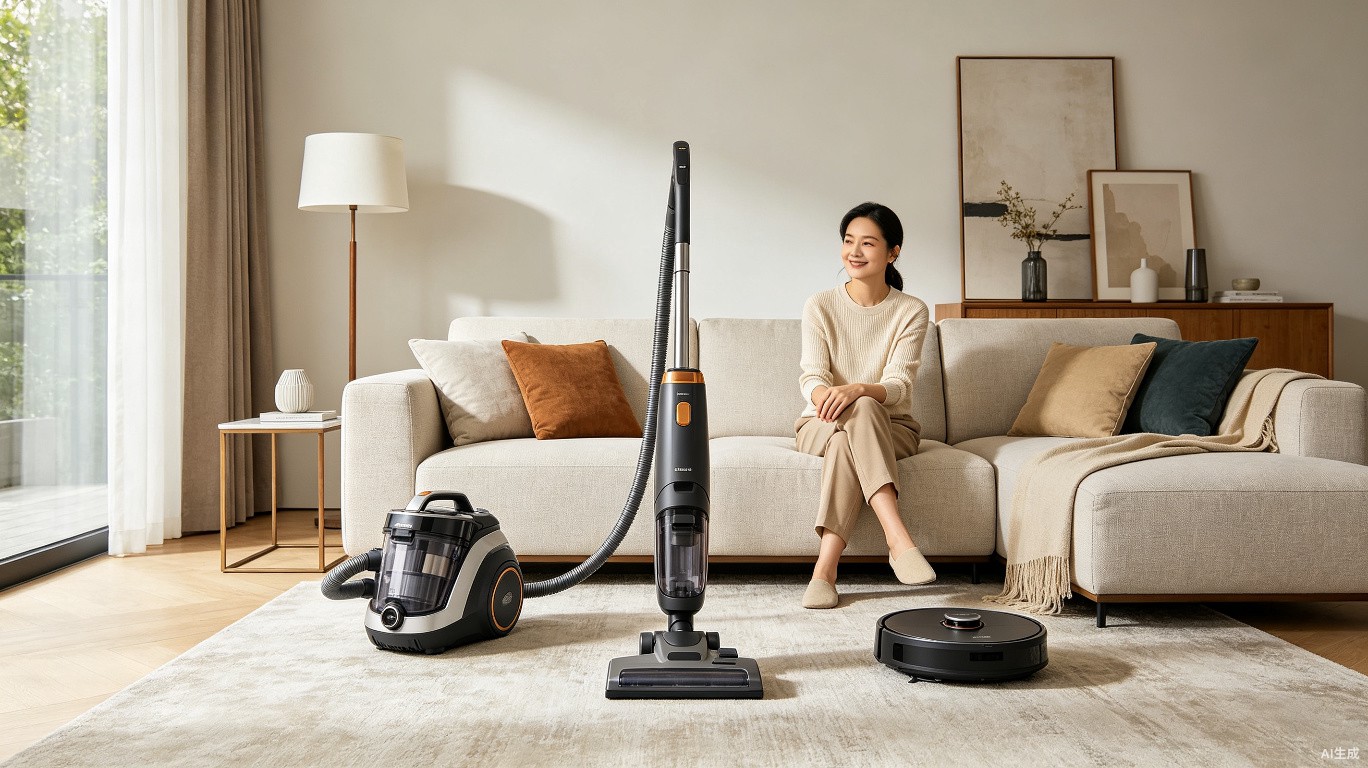
Walk down the vacuum aisle of any appliance store and you'll see a bewildering lineup: tall uprights, hose-and-canister combos, sleek cordless sticks, little round robots, and rugged drum-shaped shop vacs. They all "vacuum," but they're built for very different jobs — and choosing the wrong type is the most common — and most expensive — cleaning mistake people make.
The good news is that the vacuum world really boils down to eight main types. Each excels at something specific, whether that's deep-cleaning plush carpet, gliding across hardwood, or cleaning while you sleep. In this guide we'll walk through all eight, explain how each works, lay out the pros and cons, and tell you exactly who each type is best for. By the end, you'll know exactly which category deserves your money.
Already know the basics? Jump to our beginner's guide to vacuum cleaners for a refresher on how suction and filtration work under the hood.
1. Upright Vacuums
The upright vacuum is the classic push-along design most people grew up with. The motor, dustbin or bag, and brush roll are stacked vertically in a single tall unit that you push in front of you. The weight of the motor helps drive the rotating brush roll deep into carpet fibers, which is why uprights have long been the go-to choice for wall-to-wall carpeting.
Pros: Outstanding on carpet thanks to a heavy, motorized brush roll that lifts embedded dirt; large capacity means fewer trips to empty; single-unit design is simple to store and use; typically the best cleaning power per dollar.
Cons: Heavy and awkward on stairs; harder to maneuver under low furniture; the brush roll can scatter debris or scratch delicate hard floors if it can't be switched off; noisier than canister models.
Best for: Homes with mostly carpet, especially plush or high-pile carpet, and anyone who wants maximum deep-cleaning muscle for the money.
2. Canister Vacuums
A canister vacuum splits the machine in two: a wheeled canister that holds the motor and dust collection, and a long hose with a wand and cleaning head. You pull the canister behind you while guiding the wand. Because the motor sits in the canister rather than the head, the wand stays light and nimble — ideal for stairs, drapes, and reaching under furniture.
Pros: Lightweight wand makes stairs, ceilings, and above-floor cleaning effortless; excellent on hard floors with a dedicated bare-floor head; quieter operation; versatile attachments for upholstery and crevices.
Cons: The canister trails behind you and can bump furniture or get stuck; takes more storage space; less effective on thick carpet unless paired with a motorized power head; two parts to manage.
Best for: Homes with mostly hard floors, multi-story houses with stairs, and anyone who cleans drapes, ceilings, or car interiors regularly.
3. Cordless / Stick Vacuums
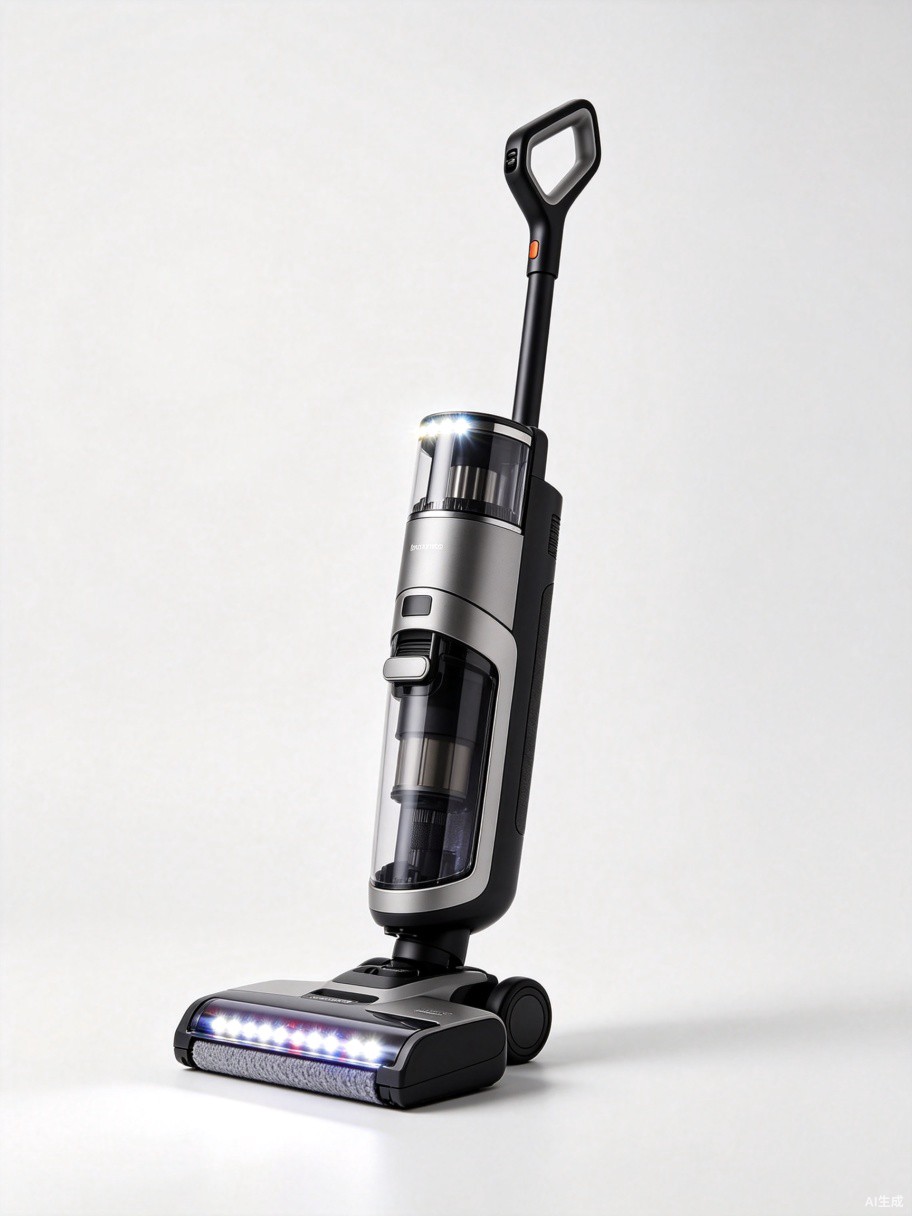
Cordless stick vacuums run on rechargeable lithium-ion batteries and ditch the power cord entirely. They're slim, lightweight, and often convert into a handheld vac for above-floor cleaning. Brands like Dyson (with its V-series) and Shark (with its ION and Stratos lines) have driven this category forward, packing cyclonic suction and motorized brush rolls into featherweight bodies. Many now rival corded models on hard floors and low-pile carpet.
Pros: No cord to plug, unplug, or drag around; extremely light and easy to grab for quick cleanups; converts to handheld for stairs, cars, and furniture; wall-mount charging keeps it ready to go.
Cons: Limited runtime (typically 20–60 minutes); suction drops as the battery drains; batteries degrade over years and are costly to replace; smaller dustbins need frequent emptying; premium models are expensive.
Best for: Small to medium homes, apartments, quick daily cleanups, and anyone who values grab-and-go convenience over marathon deep-cleaning sessions.
4. Robot Vacuums
A robot vacuum is a small, self-navigating disc that cleans floors autonomously on a schedule you set in an app. Using sensors — and, on premium models, laser lidar or cameras — it maps your home, plans efficient routes, and dodges obstacles and stairs. Pioneered by iRobot's Roomba and now dominated by contenders like Roborock, the category has added self-emptying docks, mopping, and even obstacle recognition that avoids pet messes.
Pros: Cleans automatically on a schedule, even when you're out; maintains floors daily so dirt never builds up; slides under beds and sofas where you can't reach; top models self-empty and mop.
Cons: Can't deep-clean plush carpet like an upright; struggles with stairs; can jam on cords, socks, or pet waste; navigation varies wildly between cheap and premium models; the best ones are pricey.
Best for: Hard-floor and low-pile homes, busy professionals, pet owners who want daily hair management, and anyone who'd rather never push a vacuum again.
5. Handheld Vacuums
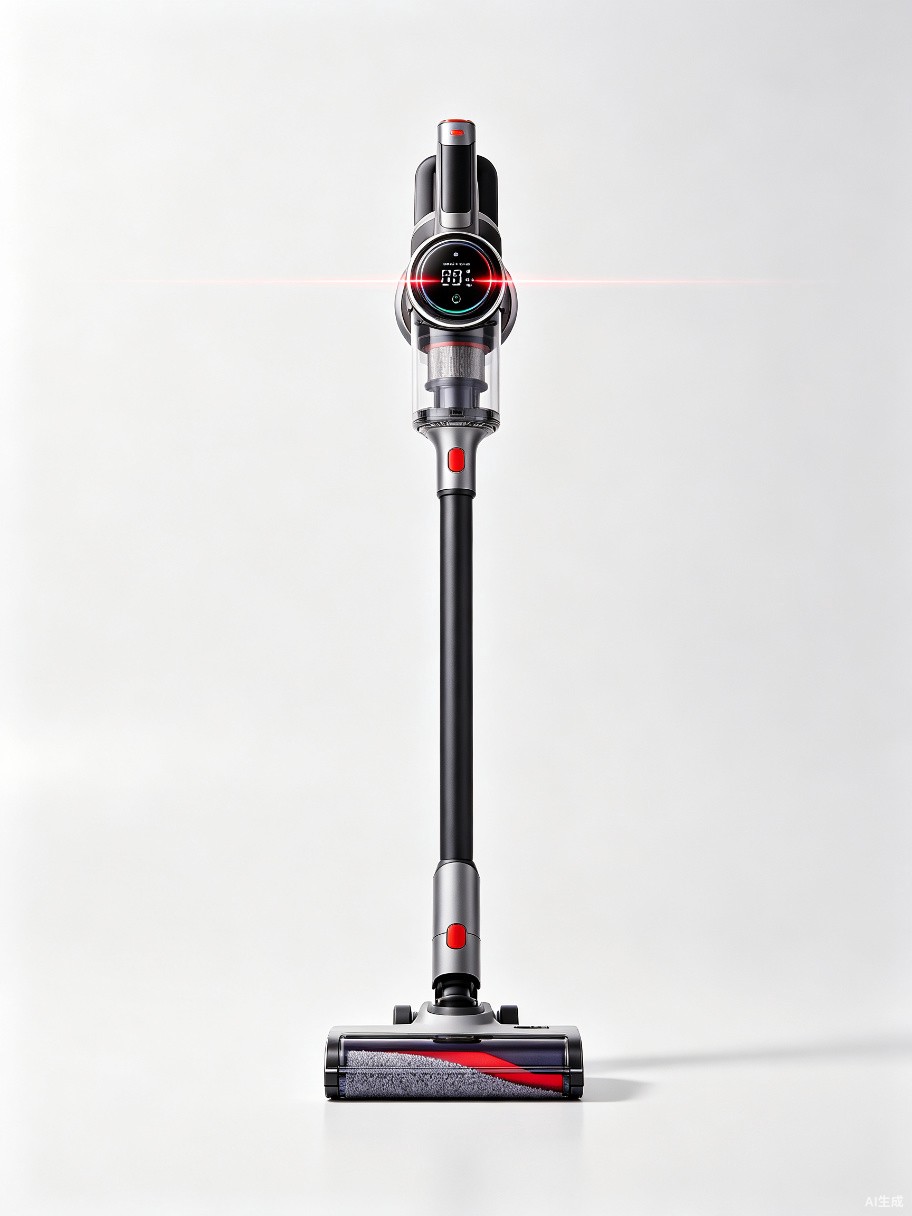
A handheld vacuum is a small, one-handed cordless vac designed for quick spot cleaning. There's no floor head — you point the nozzle directly at the mess. They're the tool of choice for crumbs on the counter, pet hair on the couch, dust on stairs, or sand in the car. Many are surprisingly powerful for their size, and some high-end handhelds (like Dyson's) share the same motor technology as full-size cordless sticks.
Pros: Instant, grab-and-go cleaning for small messes; perfect for cars, stairs, and upholstery; compact and easy to store; often the cheapest vacuum type.
Cons: Tiny dustbin fills fast; short battery life; not meant for whole-room cleaning; limited suction compared to full-size vacs; can be noisy for their size.
Best for: Spot cleaning, cars, stairs, pet owners dealing with hair on furniture, and as a supplementary vac alongside a full-size model.
6. Wet/Dry Shop Vacuums
A wet/dry shop vacuum (often just called a "shop vac") is a rugged, drum-shaped machine built to swallow almost anything — sawdust, nails, gravel, and even standing water. The motor is positioned above the tank so liquids can't reach it, and a bypass design lets you switch between dry debris and wet messes. They're the workhorse of garages, workshops, and renovation sites, and a lifesaver for flooded basements or broken washing machines.
Pros: Handles both wet and dry messes; massive capacity and huge suction for heavy debris; near-indestructible construction; doubles as a blower; unclogs easily.
Cons: Loud and bulky; awkward for everyday home cleaning; heavy when full of liquid; coarse filtration isn't suited to fine household dust or allergens; takes up significant storage space.
Best for: Garages, workshops, basements, post-renovation cleanups, and any household that needs to vacuum liquids or large debris.
7. Central Vacuums
A central vacuum system is built into the home itself. A powerful motor and collection unit are installed in a garage or basement, with piping run through the walls to inlet valves in each room. You plug a lightweight hose into an inlet and clean — the dirt travels through the pipes to the remote canister, which you empty only a few times a year. Because the exhaust vents outside, no recirculated dust returns to your living space.
Pros: Exceptionally powerful suction; exhaust is vented outside, improving indoor air quality; very quiet in the room you're cleaning; large capacity needs emptying only a few times a year; adds home resale value.
Cons: High upfront cost and professional installation required; only practical during new construction or major renovation; hose can be cumbersome to carry between inlets; inlets are fixed locations.
Best for: New builds and major renovations, large homes, and severe allergy sufferers who want the cleanest possible exhaust air.
8. Carpet Cleaners / Extractors
A carpet cleaner (or extractor) isn't a dry vacuum — it's a deep-cleaning machine that injects hot water and cleaning solution into carpet fibers, then immediately extracts the dirty water back out. Sometimes called a "steam cleaner" (though most don't actually use steam), it's what professional cleaners use to refresh carpets, remove set-in stains, and rinse out allergens. Upright models like Hoover's and Bissell's are popular for home use, while compact spot cleaners handle small spills.
Pros: Removes deep stains, odors, and trapped allergens that dry vacuuming can't; restores the look and smell of tired carpet; spot-cleaner versions rescue fresh spills before they set.
Cons: Leaves carpets damp for several hours; not for everyday cleaning; bulky and heavy to push; requires cleaning solution and tank maintenance; cannot be used on hard floors.
Best for: Periodic deep cleaning of carpets and rugs, homes with pets or kids prone to spills, and refreshing carpets before guests or a move.
How to Choose Between Them
The right type depends less on which is "best" and more on your home, your floors, and your habits. A quick way to narrow it down: start with your dominant floor type. Carpet-heavy homes lean toward uprights or motorized canisters; hard-floor homes lean toward canisters, cordless sticks, or robots. Then layer in your lifestyle — busy and time-poor? A robot vacuum maintains floors daily. Lots of stairs? A lightweight canister or cordless stick wins. Renovating or DIY-inclined? A wet/dry shop vac earns its keep fast.
Remember that many households benefit from more than one type. A common, highly effective pairing is a robot vacuum for daily maintenance plus a cordless stick or upright for deeper, on-demand cleaning. You don't need every type — you just need the one or two that match how you actually live.
For a deeper look at one of the trickiest decisions — whether to go cordless or stick with corded — read our cordless vs. corded vacuum comparison. And when you're ready to shop, our best vacuums of 2026 rounds up the top-rated models in each category.
Ready to Compare Top Models?
Now that you know which type of vacuum suits your home, let us help you pick the best model in that category. We've tested the leading vacuums across all eight types.
See Our Best Vacuum Reviews →